The Académie Drawing: Why Every Session Ended at the Same Pose
The académie is a genre before it is an exercise — and the best examples know it.
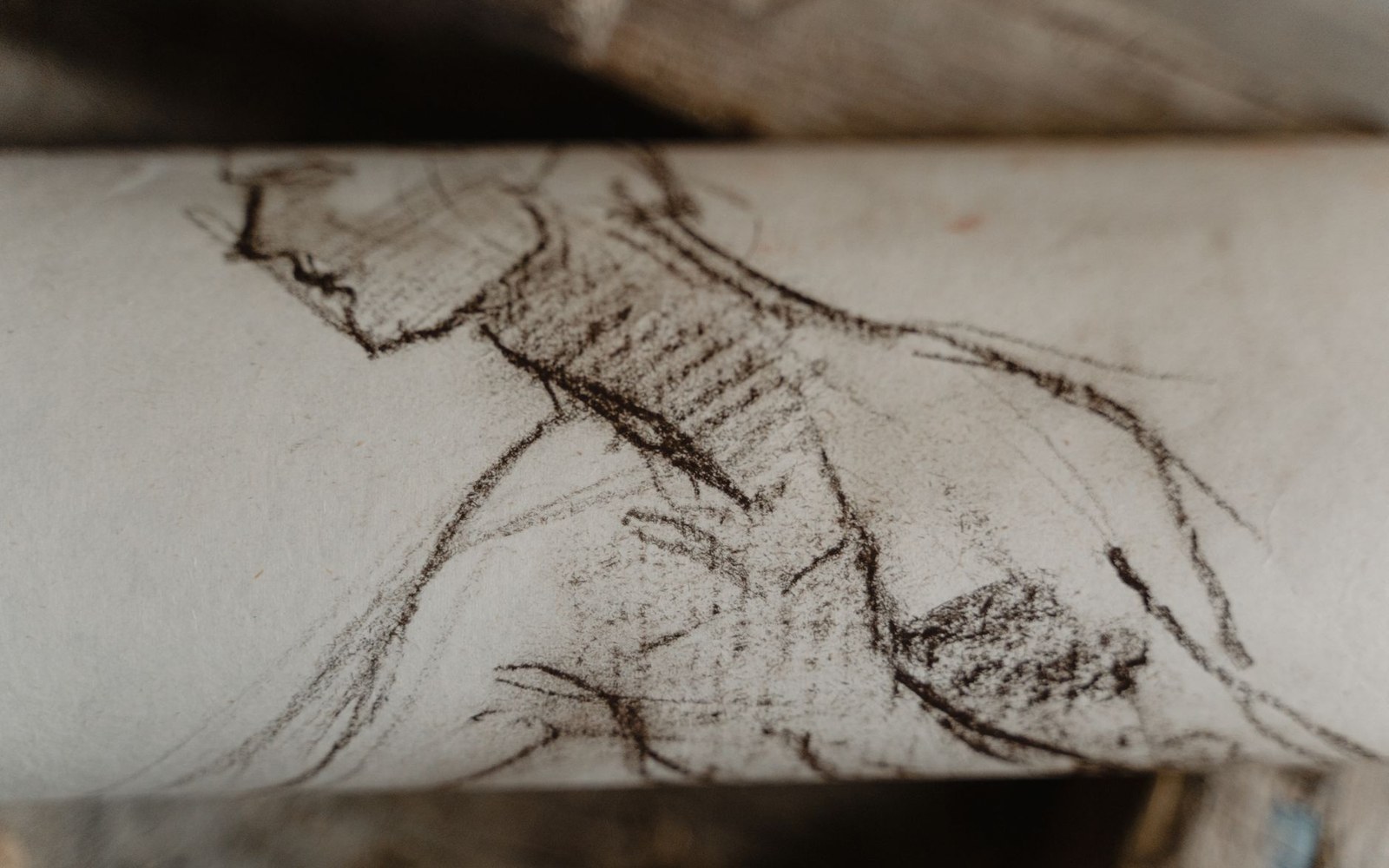
Charcoal, two sessions, one constrained pose: the exercise that had to be handed in for correction.
Photo: Tima Miroshnichenko / PexelsWhat the Practice Actually Was
The académie — a studio drawing of an adult male nude in a fixed pose, typically executed in charcoal across two supervised sessions — was the central discipline of the Académie Royale de Peinture et de Sculpture ↗ from its founding in 1648. The model held a pose selected by the presiding academician, the student worked to a finish, and the result was brought for formal correction. That correction was itself a public performance: flaws in contour, shadow, and anatomical proportion were noted in front of the assembled atelier.
The constraint was structural. Poses were drawn from a repertoire — contraposto, the twisted torso, the raised arm — that corresponded to poses found in antique sculpture and, by deliberate echo, in history painting. The model was not incidental to the composition tradition; the model was the composition tradition made flesh. When a student resolved the fall of light across a shoulder or nailed the foreshortening of a thigh, he was rehearsing moves that would reappear, enlarged and costumed, in a finished Salon canvas.
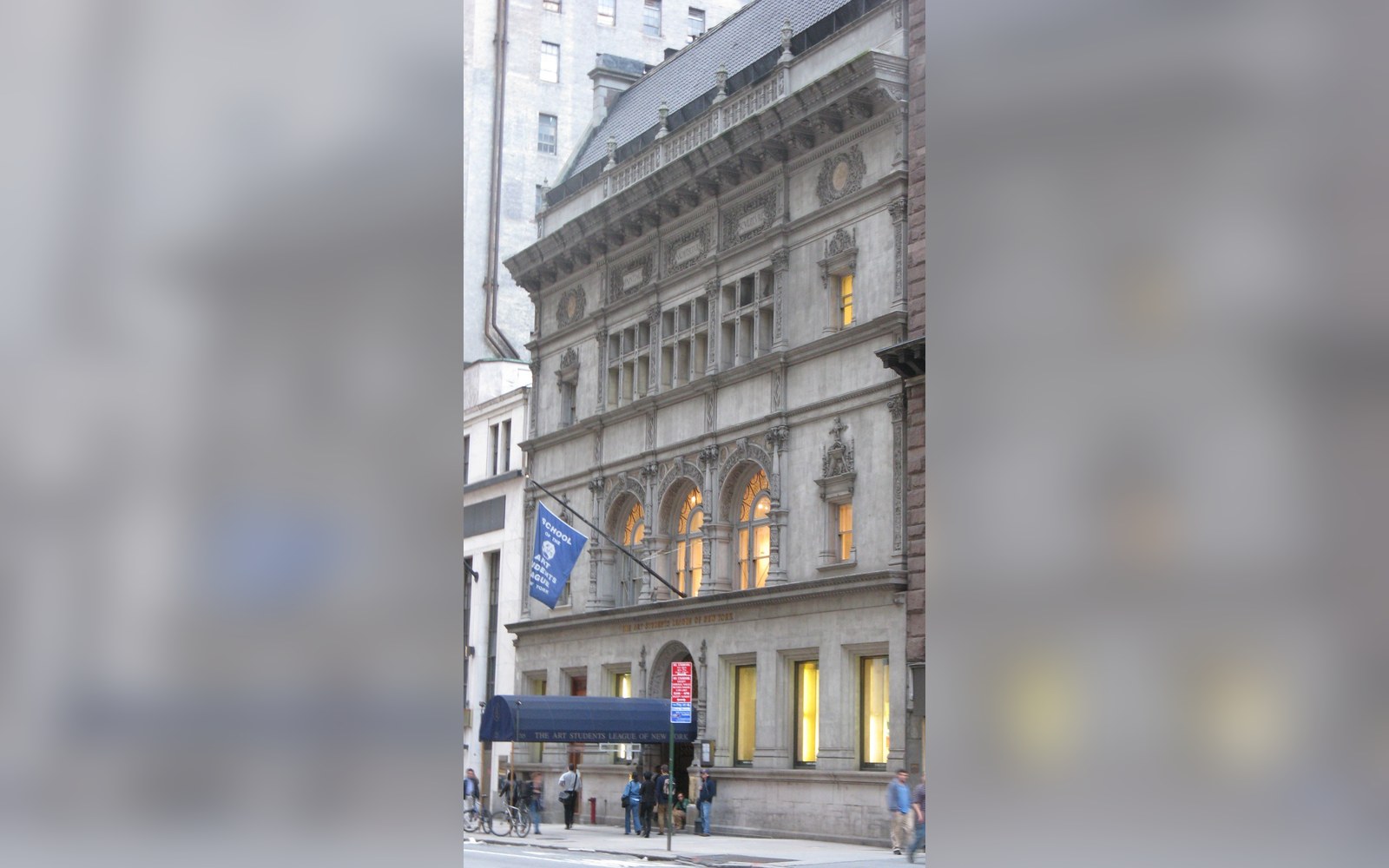
215 West 57th Street, occupied since 1892 and still running studio classes. — The Building on 57th Street That Taught Almost Everyone.
Photo: American-fine-arts · Wikimedia CommonsTwo sessions meant one session to establish the forms and a second to resolve value and surface. Charcoal allowed revision; the stick could be lifted and restated faster than chalk. The format — typically a large sheet, the figure life-size or close — demanded commitment to the whole before fixing any part.
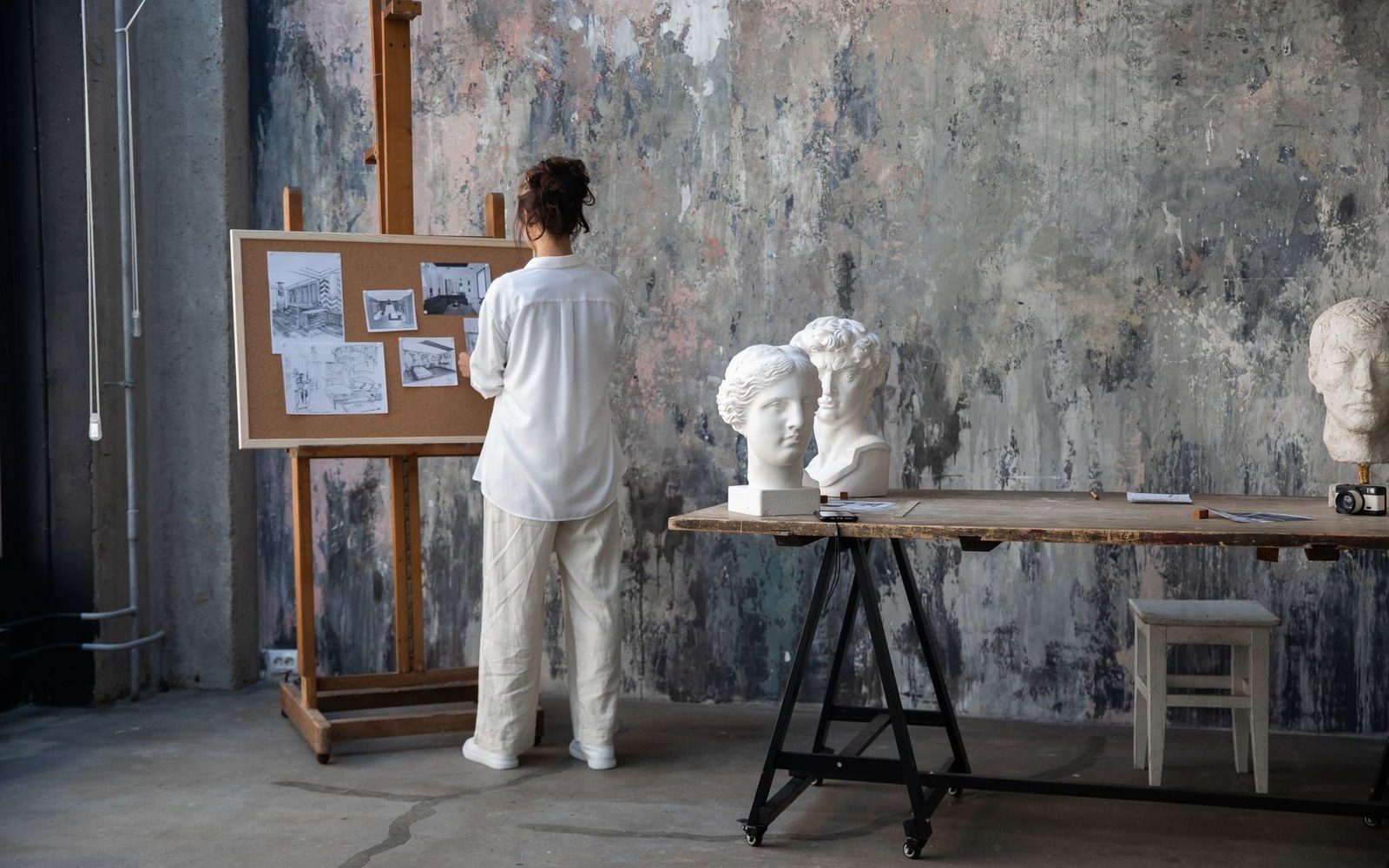
A wall of charcoal studies — the académie as a body of work.
Photo: KATRIN BOLOVTSOVA / PexelsWhat survives in museum collections are not the failures but the submissions that passed correction: drawings with a tonal authority that can still stop a viewer. The Louvre ↗ holds a substantial group across several centuries, and the range of hands working within identical constraints makes the genre's logic visible — the same pose, the same duration, radically different outcomes determined entirely by the quality of seeing.
By the time the École des Beaux-Arts absorbed the tradition in the nineteenth century, the académie had become the foundational credential of French figure training: evidence, produced under supervision, that a painter could read a body in light.