The Building on 57th Street That Taught Almost Everyone
The Art Students League of New York, founded in 1875, built an institution without degrees, without fixed curricula, and without a single student who had to justify why they came.
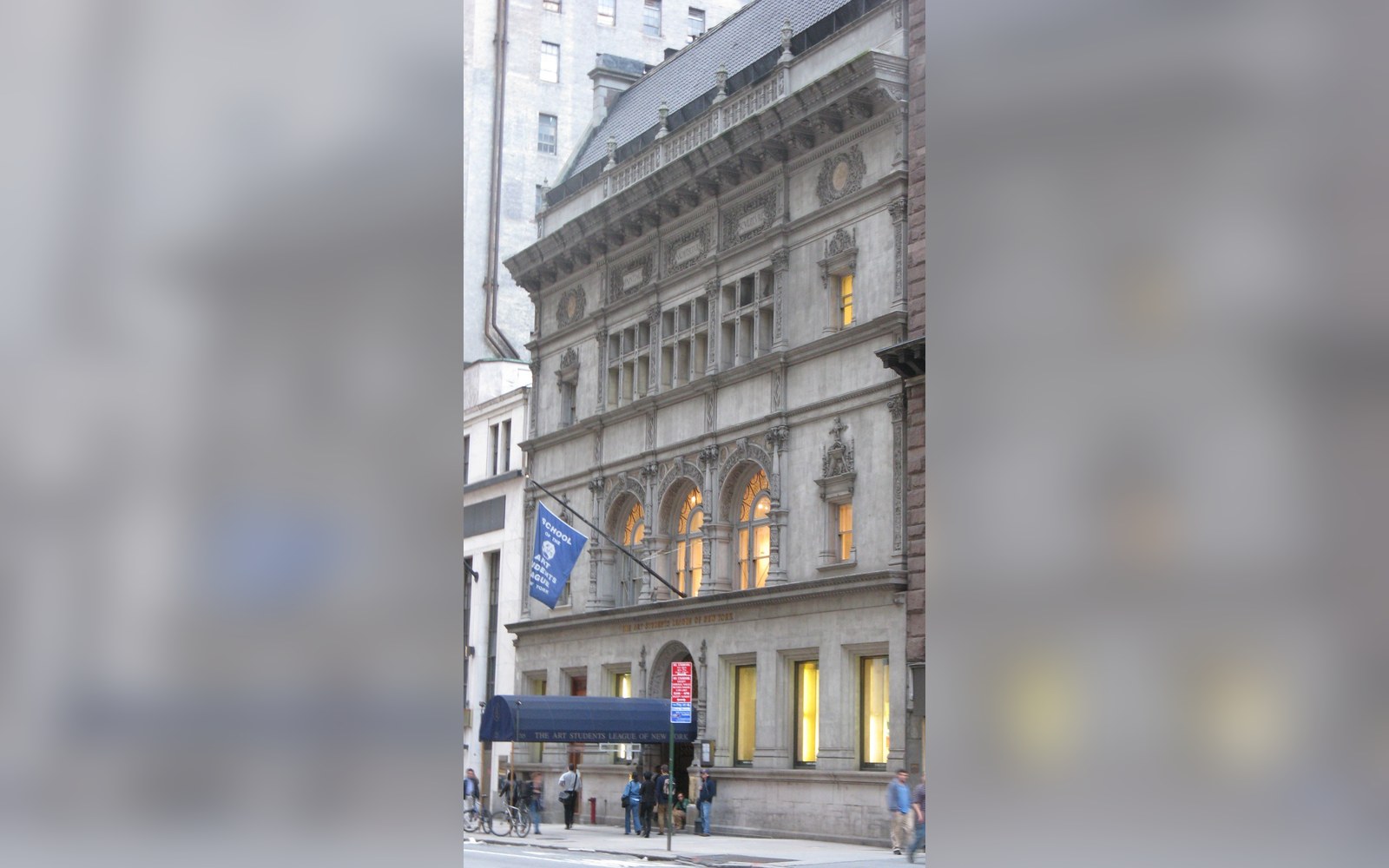
215 West 57th Street, occupied since 1892 and still running studio classes.
Photo: American-fine-arts · Wikimedia CommonsA Rebellion That Became a School
The League was born from a walkout. In 1875, a group of students at the National Academy of Design grew frustrated with the Academy's suspension of its life classes, gathered their materials, and started their own school. They rented space, hired instructors, and operated on a principle that American arts education had not yet tried at scale: students would pay month to month for the specific instruction they wanted, from teachers they chose, with no degree waiting at the end. The institution that resulted would, over the next century and a half, shape the direction of American figure painting more consequentially than any rival.
The move to 57th Street came in 1892, when the League took up residence in the American Fine Arts Society building — a Beaux-Arts structure it still occupies. The address became a kind of shorthand. When painters in the twentieth century said they had studied "at the League," they meant that building: the large skylighted studios, the open enrollment, the month-by-month freedom that kept the institution financially lean and pedagogically flexible. No department heads decided what was taught; no accreditation body demanded outcomes. Instruction was organized around the life class, and the implicit argument was that drawing and painting from the adult figure, in front of a working painter, was sufficient foundation for almost anything a student might want to do afterward.
Who Passed Through, and What They Carried Out
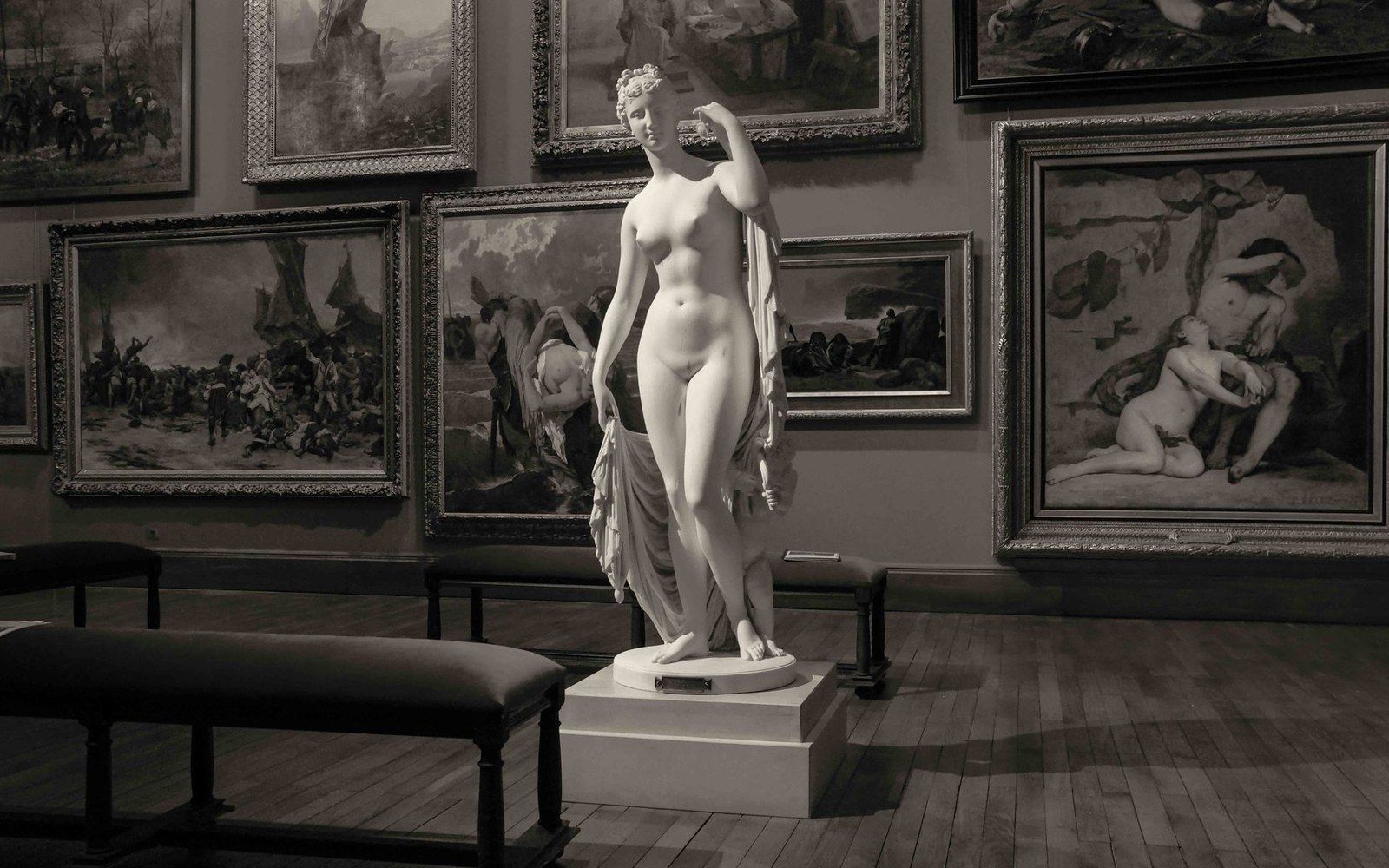
The concours produced pictures on this scale — four years in Rome depended on getting the figure right. — Four Years in Rome, Paid For by Getting the Nude Right.
Photo: rene / PexelsThe roster reads like a syllabus of twentieth-century American art. Edward Hopper studied at the League under Robert Henri and Kenneth Hayes Miller in the first decade of the 1900s, absorbing a direct, unidealized approach to the figure that stayed visible in his work for sixty years. George Bellows, also a Henri student, brought the same candor to subjects — boxers, crowd scenes, ordinary bodies in motion — that the École des Beaux-Arts tradition would have considered beneath its notice. Georgia O'Keeffe enrolled in 1907, studying with William Merritt Chase and others before finding her own path outward; she retained the structural discipline the League's figure training had given her even as her subject matter moved decisively away from the human form. Jackson Pollock arrived in the early 1930s to study with Thomas Hart Benton, whose emphasis on dynamic figure composition left a structural imprint that persisted in Pollock's work long after the recognizable figure had dissolved entirely.
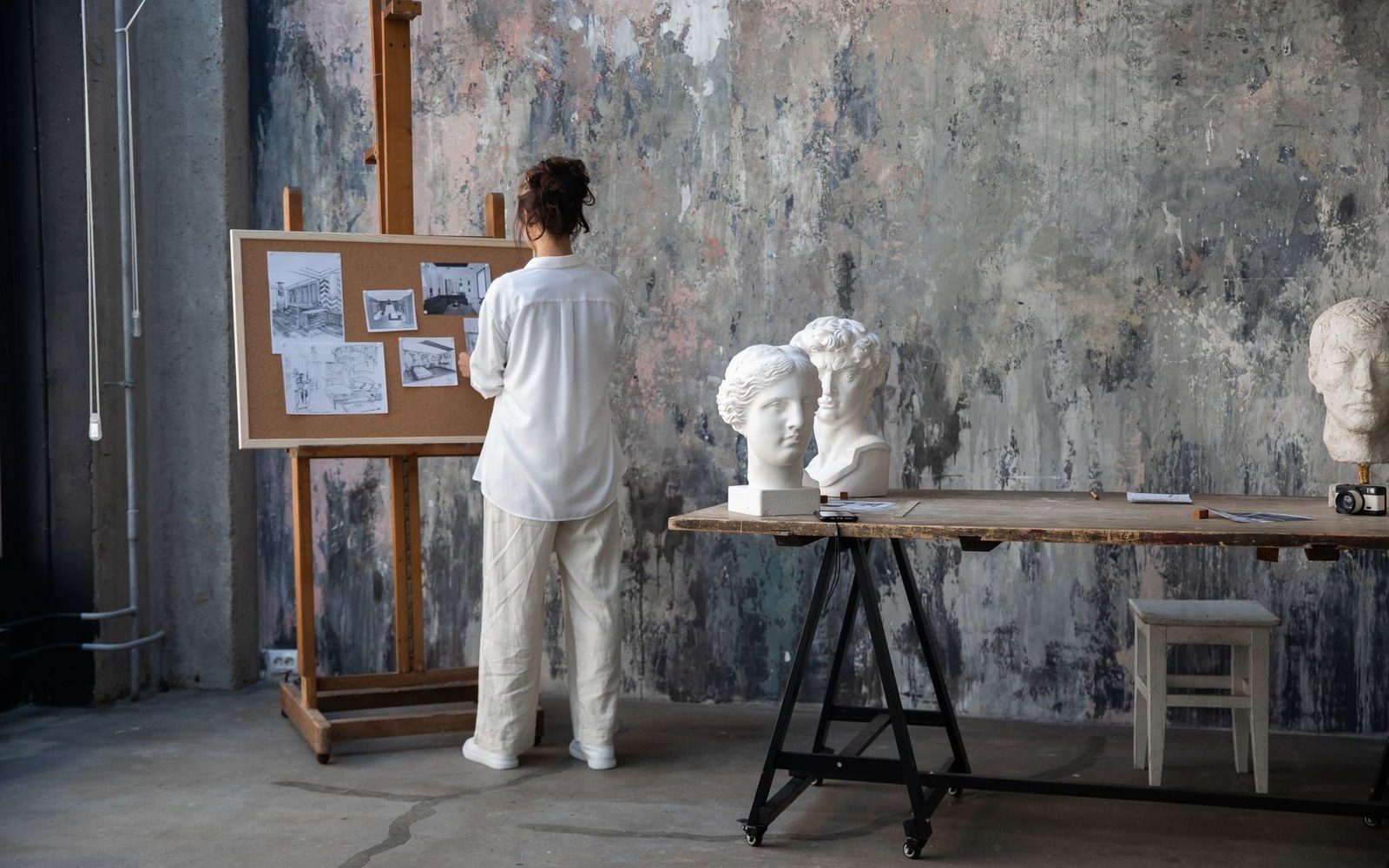
A wall of charcoal studies — the académie as a body of work.
Photo: KATRIN BOLOVTSOVA / PexelsWhat these painters shared was not a style but an exposure: sustained hours in front of a model, working from observation under instructors who were themselves practicing artists rather than academic administrators. The League hired teachers who were showing, arguing, and disagreeing with one another — Hans Hofmann and Reginald Marsh taught there in the same era, which is to say that abstraction and American social realism were being conducted in adjacent rooms. Students moved between them.
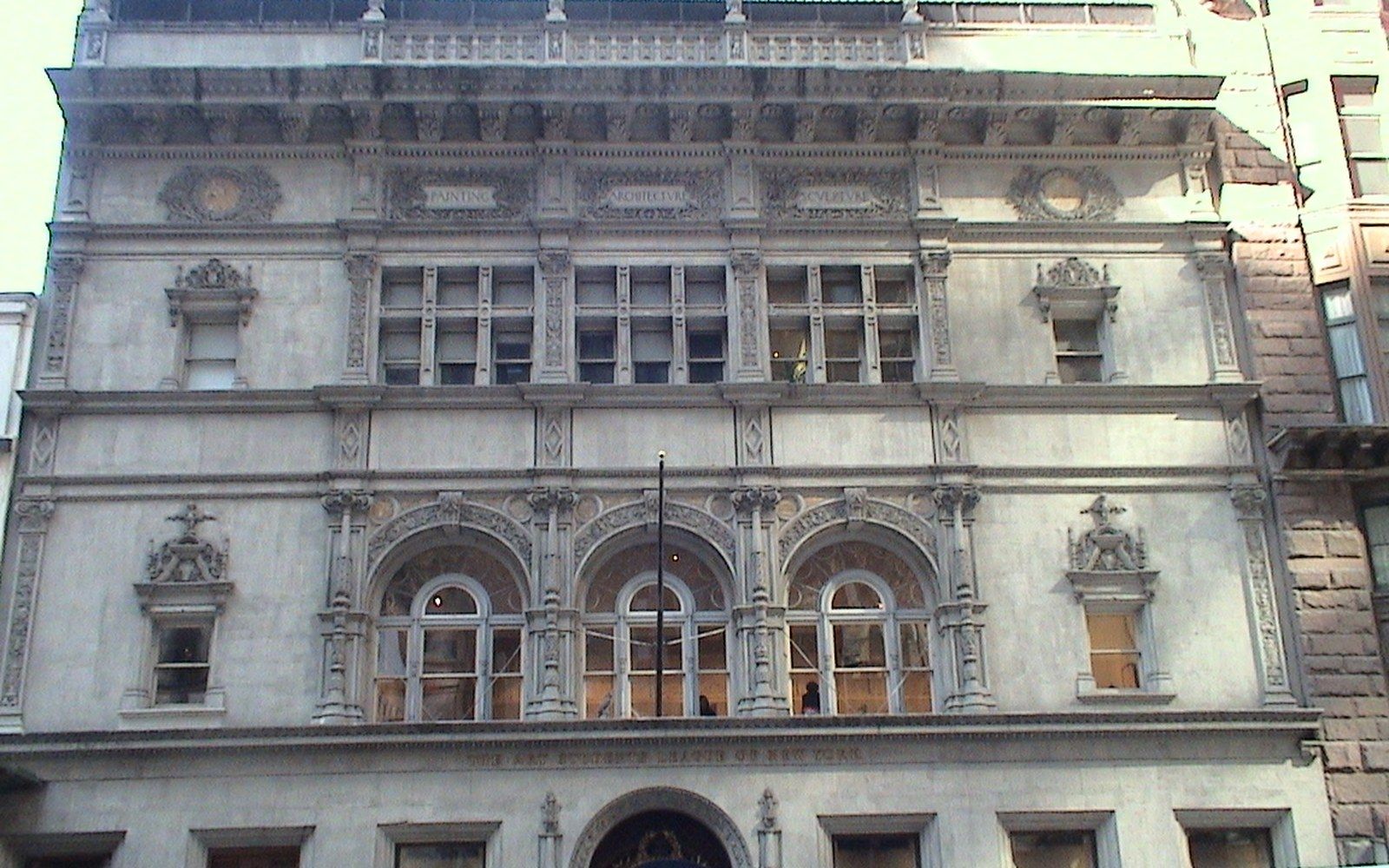
The League’s 57th Street front, where the painting, architecture and sculpture panels are cut into the stone.
Photo: Art Students League of New York · Wikimedia CommonsWhat the Model Changed
The League's non-degree structure had a specific consequence for American figure painting ↗: it kept instruction attached to practice rather than to institutional credential. A painter who had spent three months in William Merritt Chase's class and found it useful could stay; one who had not could leave without penalty. This elasticity attracted painters who might have been screened out of more formally structured academies — by background, by finances, or by temperament — and it meant that the institution could absorb radical shifts in artistic direction without requiring a committee to approve them.
The Art Students League ↗ has operated continuously since 1875, making it one of the longest-running arts instruction programs in the United States. What it built, and what made the 57th Street address matter, was not a style or a canon but an infrastructure: a place where someone who wanted to paint the human figure seriously could find a model, a skilled instructor, and a month to work, without the apparatus of a degree program surrounding them. American painting, in its most consequential decades, walked in and out of that building in considerable numbers.