Modigliani's Only Solo Show, Closed on the Day It Opened
A single afternoon in December 1917 was all the Berthe Weill Gallery managed before the police arrived.
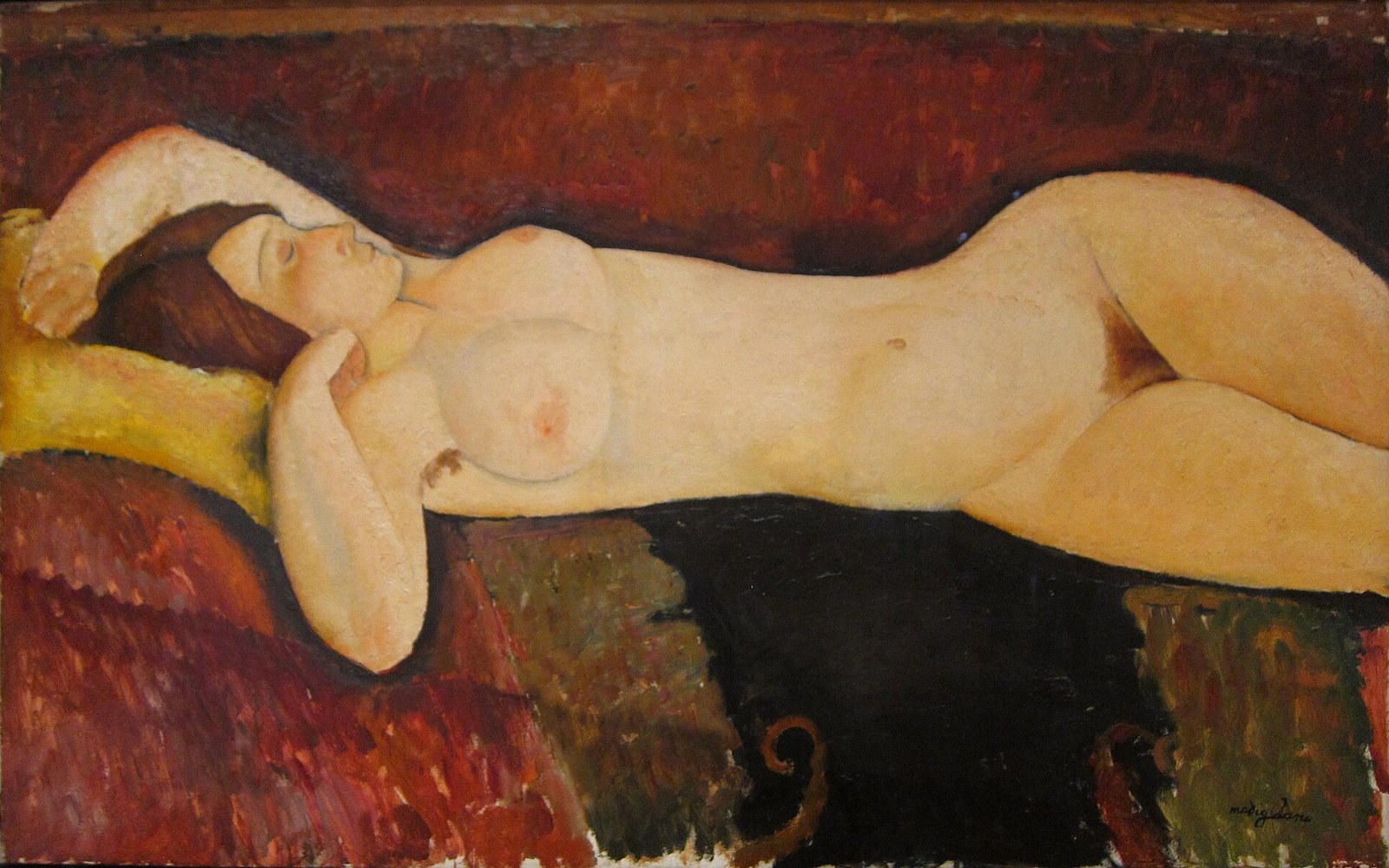
One of the nudes hung facing the rue Taitbout — the reason the police came.
Photo: Amedeo Modigliani - Le Grand Nu · Wikimedia CommonsThe Window That Ended It
On 3 December 1917, Berthe Weill ↗ opened an exhibition of thirty-some paintings and drawings by Amedeo Modigliani in her small gallery on the rue Taitbout in Paris. It was the first and only solo show of his career. By the end of the opening day, the commissaire of police from the adjacent station had arrived, demanded the removal of the works visible from the street, and ordered the show shut on grounds of public indecency. The offending images were nudes — painted with the frank, undecorated directness that Modigliani had been developing through the mid-1910s — and one of them had been placed in the window as the obvious draw. The commissaire reportedly needed only a glance at the painted pubic hair to make his decision. The show closed before it had properly opened.
Weill, who had spent fifteen years running one of Paris's more adventurous small commercial spaces, had shown Matisse, Picasso, and work from the nascent Fauvist circle, often to modest or hostile reception. She was not easily rattled. But a police order admitted no argument, and the paintings came down. The episode left almost no contemporary press record — the closure happened too fast for reviews — and what survives is largely Weill's own account in her 1933 memoir.
What Was Actually on the Walls
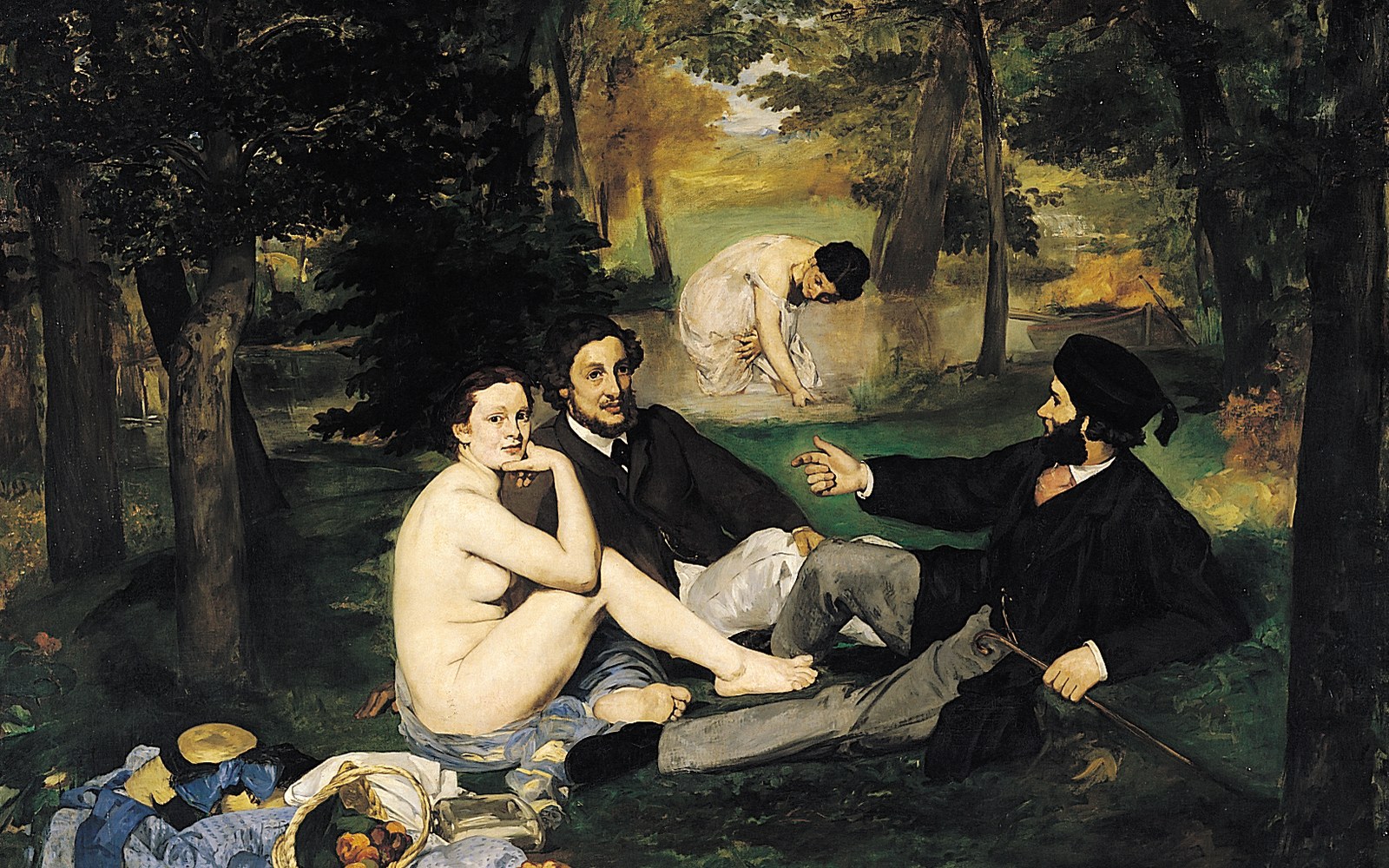
The picture that carried the Refusés: two dressed men, one undressed woman, and a bather at the back. — Two Years in the Studio, a Fortnight of Shouting, and the Whole Argument Was Over.
Photo: Édouard Manet - Le Déjeuner sur l'herbe · Wikimedia CommonsThe exact list of works shown is not fully established, but the exhibition drew on the concentrated sequence of nudes Modigliani had painted in 1916 and 1917, most of them with the support of his dealer Léopold Zborowski ↗, who organised the show with Weill. These were large, warm-toned canvases — ocher and terracotta flesh against neutral backgrounds — painted with a line-driven economy that owed something to his earlier sculptural work and something to Cézanne's structural method, though the sensibility was entirely Modigliani's own.
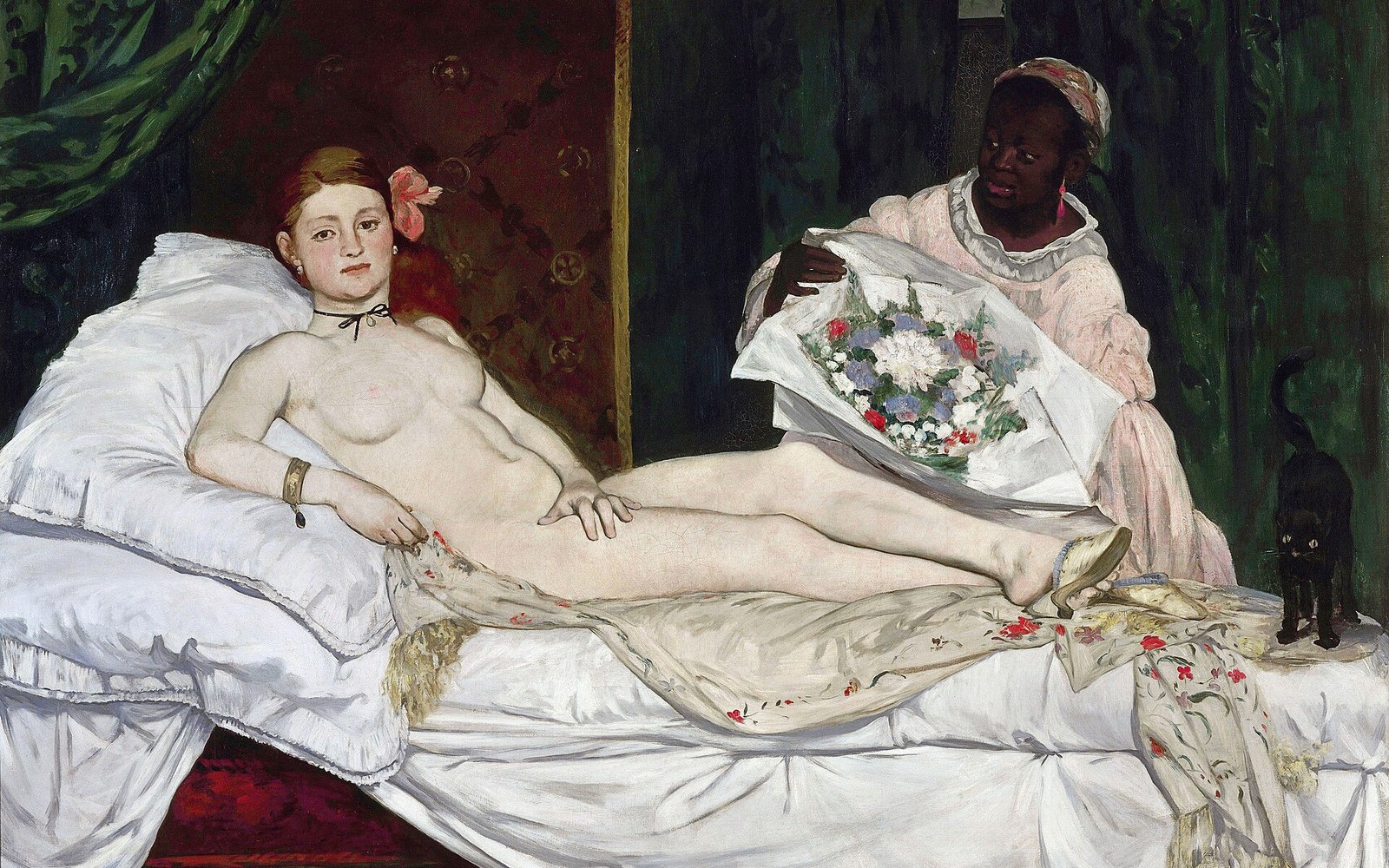
Olympia on the wall at the Musée d’Orsay, where the picture has hung since 1986.
Photo: Edouard Manet - Olympia - Google Art ProjectFXD · Wikimedia CommonsSeveral of the nudes from this period have established locations. Reclining Nude (Le Grand Nu, c.1917), among the most monumental of the series, is held by the Museum of Modern Art, New York ↗. Nu couché (sur le côté gauche) (1917) is in a private collection, having been sold at auction in 2018. A number of others entered private collections during the 1920s and 1930s and have passed through major auction rooms since; their exhibition history prior to acquisition is rarely traceable with confidence. Whether the precise canvas in the window that December afternoon can be identified is a question the documentation does not settle.
A wall of charcoal studies — the académie as a body of work.
Photo: KATRIN BOLOVTSOVA / PexelsWhat the paintings share is the absence of mythological or anecdotal cover: no Venus, no allegory, no story. The women lie on draped surfaces and look back — or deliberately look away — without the mediating fiction that had given the academic nude its institutional permission. That directness was exactly what the commissaire found unacceptable and what subsequent collectors found compelling.
That directness was exactly what the commissaire found unacceptable and what subsequent collectors found compelling.
Afterward
Modigliani died in January 1920, at thirty-five, from tubercular meningitis. He did not live to see the nudes reassessed. Within a decade of his death, the reputation that had eluded him in life was being constructed retrospectively, partly through the myth of the cursed bohemian and partly through the genuine quality of the work. The 1917 closure, by then, had been folded into the legend — the artist so transgressive that even a single afternoon was too much.
Weill received almost nothing financially from the arrangement; the commercial benefit, such as it was, went elsewhere. Her memoir records the episode without self-pity, which is consistent with everything else known about how she ran her gallery. The show itself lasted perhaps a few hours. What it established — that these paintings would not go quietly — has held for more than a century.