Eakins Loses the Pennsylvania Academy
Thomas Eakins had been directing the Pennsylvania Academy of the Fine Arts' life classes since 1876, and by 1882 he held the title of director of the schools. His methods were not secret. He brought dissected cadavers into the classroom. He photographed students in motion, unclothed, as part of a systematic study of anatomy in action. He sent both male and female students to observe surgical operations at Jefferson Medical College. And in the life class, he removed the loincloth from a male model in front of a mixed group — meaning a group that included women.
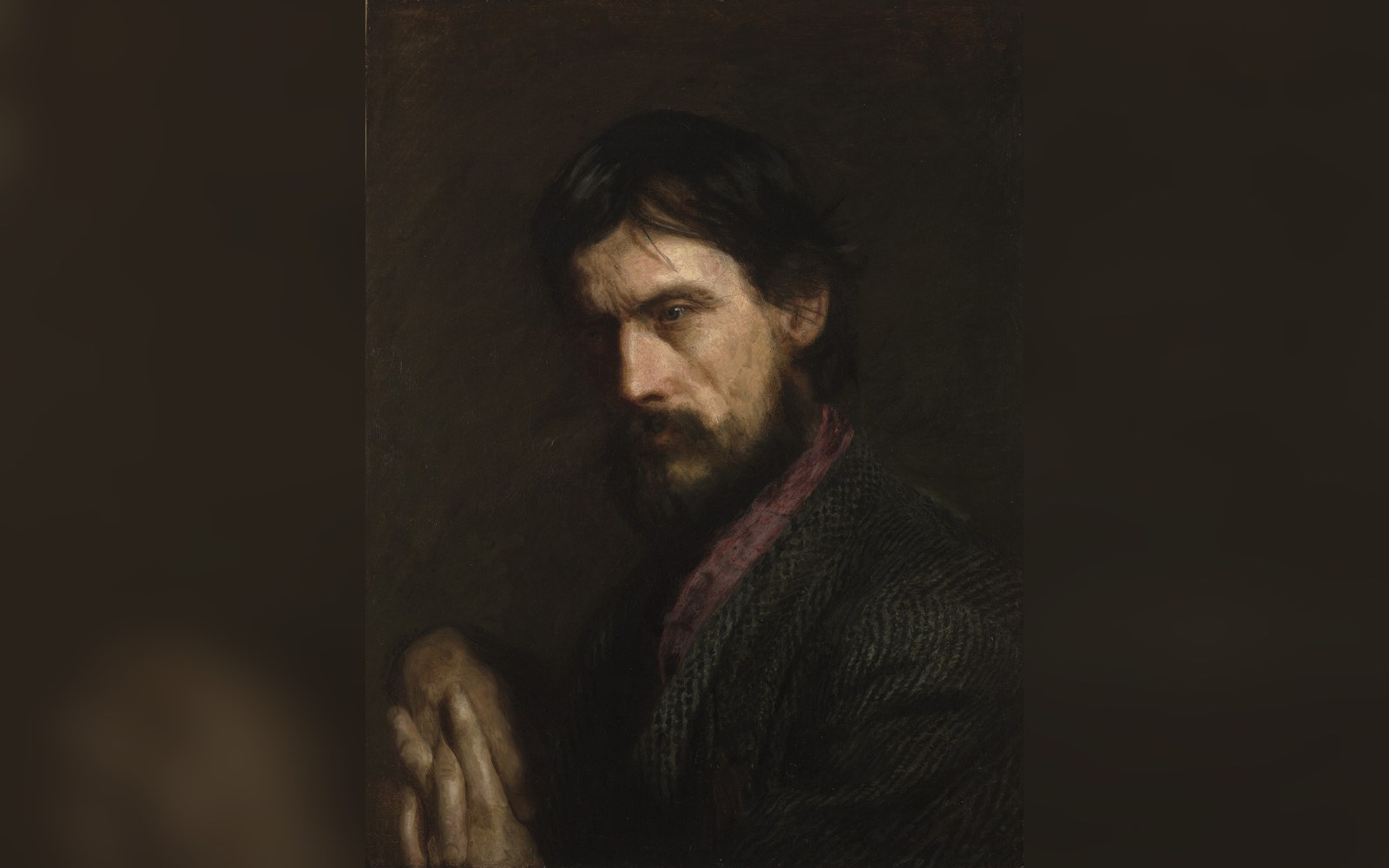
Eakins as his students saw him — the teacher the board removed in February 1886.
Photo: Thomas Eakins - The Veteran (Portrait of George Reynolds) - 1961.18.20 - Yale University Art Gallery · Wikimedia CommonsThe man who thought the pelvis was the point
The Academy's board of directors accepted the resignation he offered them, or was helped to offer them, in February 1886. The official record is careful about language; the letters that survive are less so. Eakins had argued, with a persistence that his supporters found heroic and his opponents found exhausting, that genuine knowledge of the human figure required genuine exposure to it. The pelvis, he maintained, was the centre of the body's movement, and any teaching that draped or skirted it was training students in an evasion rather than a discipline.
Philadelphia in 1886 was not uniformly hostile to that idea. The Academy had been one of the most progressive schools in the country on the question of women's access to life drawing — far ahead of, say, the Royal Academy Schools in London, which would not fully open the life class to women until 1893, and then only under conditions designed to manage rather than resolve the anxiety. The Pennsylvania Academy had admitted women to life classes decades earlier. The controversy around Eakins was less about whether women should draw from the nude than about what, exactly, they should be permitted to see.
What the students did
Charcoal, two sessions, one constrained pose: the exercise that had to be handed in for correction. — The Académie Drawing: Why Every Session Ended at the Same Pose.
Photo: Tima Miroshnichenko / PexelsWithin days of Eakins's departure, a group of students — somewhere between thirty and fifty, depending on which account you follow — resigned in protest and organised themselves into the Art Students' League of Philadelphia, a body they ran on cooperative lines, with Eakins as their instructor. The name echoed the Art Students League of New York, founded eleven years earlier on similarly anti-establishment principles. The Philadelphia league was shorter-lived; it dissolved by around 1893. But its existence confirmed that the argument was not simply Eakins against an institution — it was a genuine split in what American art training thought it was for.
A wall of charcoal studies — the académie as a body of work.
Photo: KATRIN BOLOVTSOVA / PexelsEakins continued to teach elsewhere: at the Art Students League of New York, at the Drexel Institute. He went on making the work that had always made the teaching explicable — the portraits with their unsparing attention to weight and mortality, the figure paintings in The Gross Clinic ↗ (1875, now held jointly by the Philadelphia Museum of Art and the Pennsylvania Academy itself) that treat flesh and surgical procedure with the same dispassionate regard. That the Academy now holds the painting is one of art history's quieter ironies.
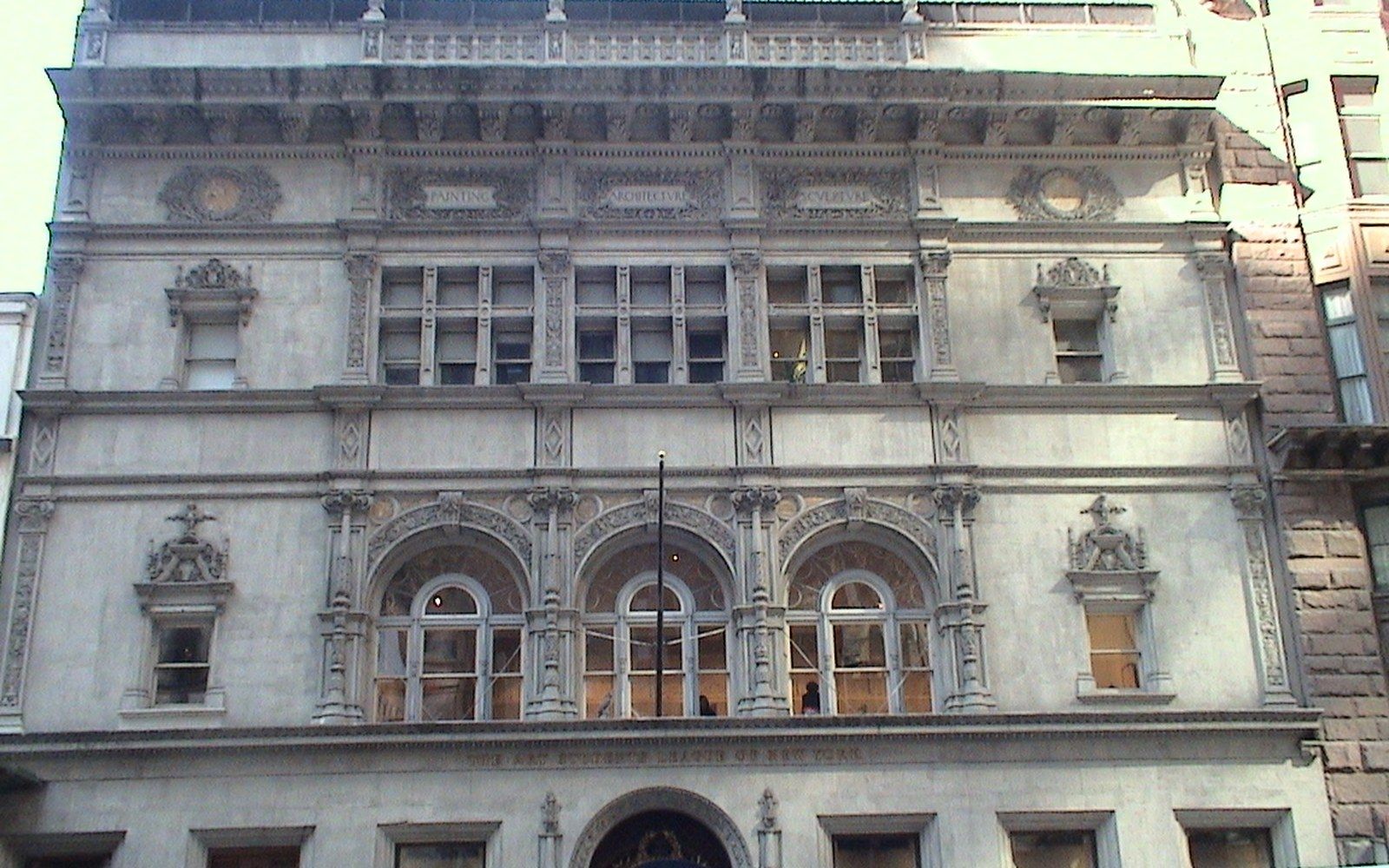
The League’s 57th Street front, where the painting, architecture and sculpture panels are cut into the stone.
Photo: Art Students League of New York · Wikimedia CommonsHis reputation suffered in the short term and expanded enormously after his death in 1916. Later assessments — including the retrospective scholarship that gathered pace through the twentieth century — positioned him as the figure who tried to drag American academic training into alignment with what the body actually is, against an institutional culture that preferred a managed representation of it. The Pennsylvania Academy's own research resources on Eakins ↗ document both sides of that argument, without fully resolving it.
What the 1886 dismissal produced, beyond the immediate schism, was a clarification. Eakins believed the life class was not a convention to be observed but a laboratory to be used. The board believed the opposite: that the life class was a convention, and that conventions exist because the alternative is worse. Both sides were, in their own terms, entirely consistent. They simply could not occupy the same institution at the same time.