Jenny Saville Paints at a Size That Makes the Subject Impossible to Look Away From
Canvases measured in metres, not inches — and why the scale is the argument.
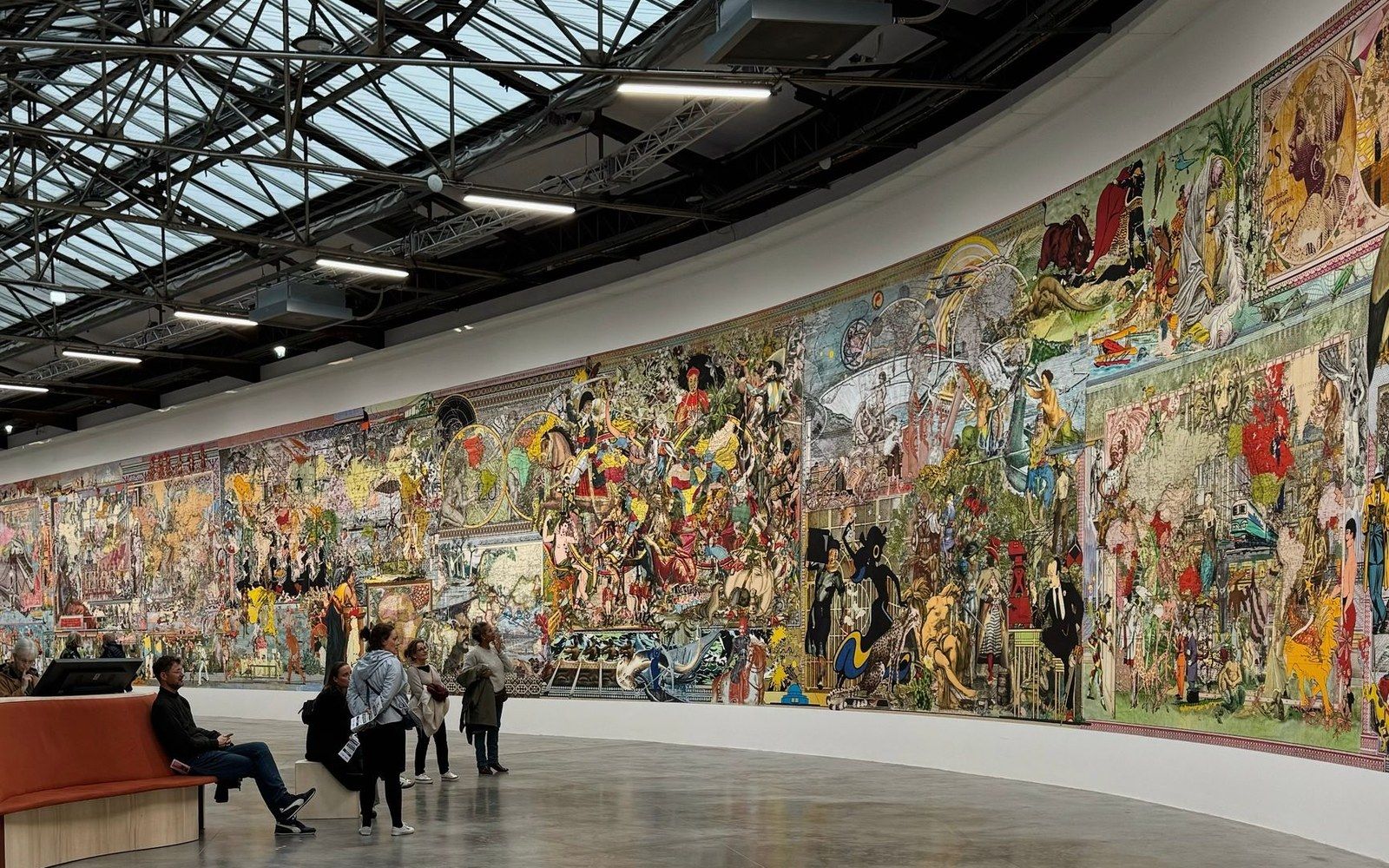
Figure painting hung at a size that will not let a viewer step back far enough.
Photo: Polina Chistyakova / PexelsStanding Too Close to Look Away
Propped (1992) is roughly 213 by 183 centimetres. Plan (1993) is larger still. Both are held in private collections and regularly cited in Gagosian's published record of Saville's work ↗ as foundational canvases from her early career. The dimensions are not incidental: at that scale, a viewer standing at a normal reading distance cannot take the whole figure in without stepping back, and stepping back is exactly what the paintings resist. The flesh presses against the picture plane. There is nowhere comfortable to stand.
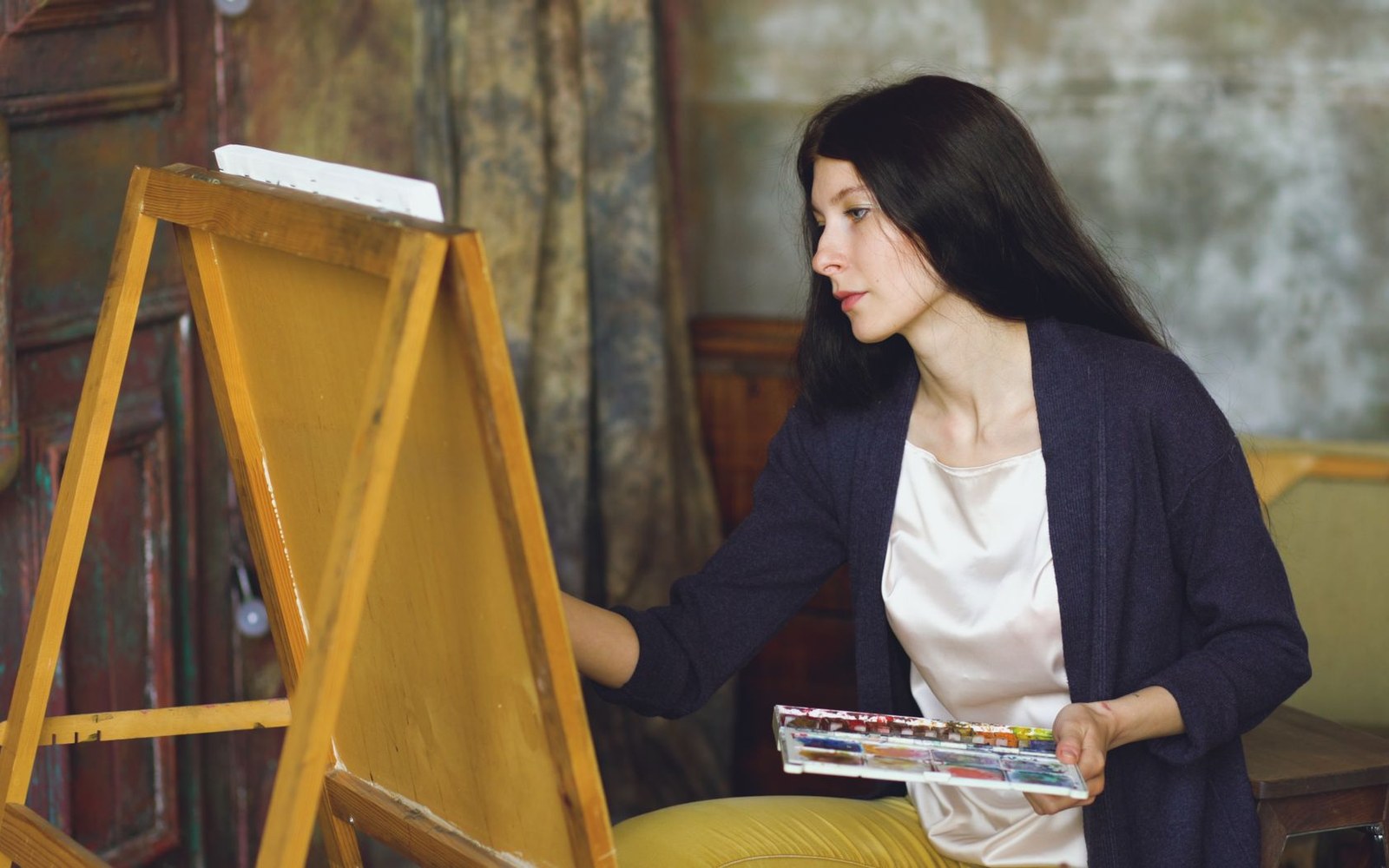
North light, a loaded palette, a model on the stand: the working arrangement the academies formalised and the studios kept.
Photo: Vitaly Gariev / PexelsSaville, born in Cambridge in 1970 and trained at Glasgow School of Art, arrived at this strategy early. Where the academic tradition measured the nude against the idealised canon — a figure roughly seven-and-a-half to eight heads tall, held at a distance that allowed the eye to compose — Saville collapsed that distance entirely. The bodies in Propped and Plan are not presented for admiration or even scrutiny. They occupy the canvas the way a person occupies a room: too large to summarise, too present to aestheticise.
The tradition she was pushing against is long. Titian's Venus of Urbino, Ingres's odalisque, even Courbet's frontal nudes all operated within conventions that managed scale to sustain an implied hierarchy between viewer and viewed. The figure was always, at some level, contained. Saville's canvases refuse that containment. Plan carries text incised into the painted skin — the vocabulary of cosmetic surgery, the mapped zones of a body designated for alteration — which, at life-plus scale, reads as both clinical annotation and something closer to branding.
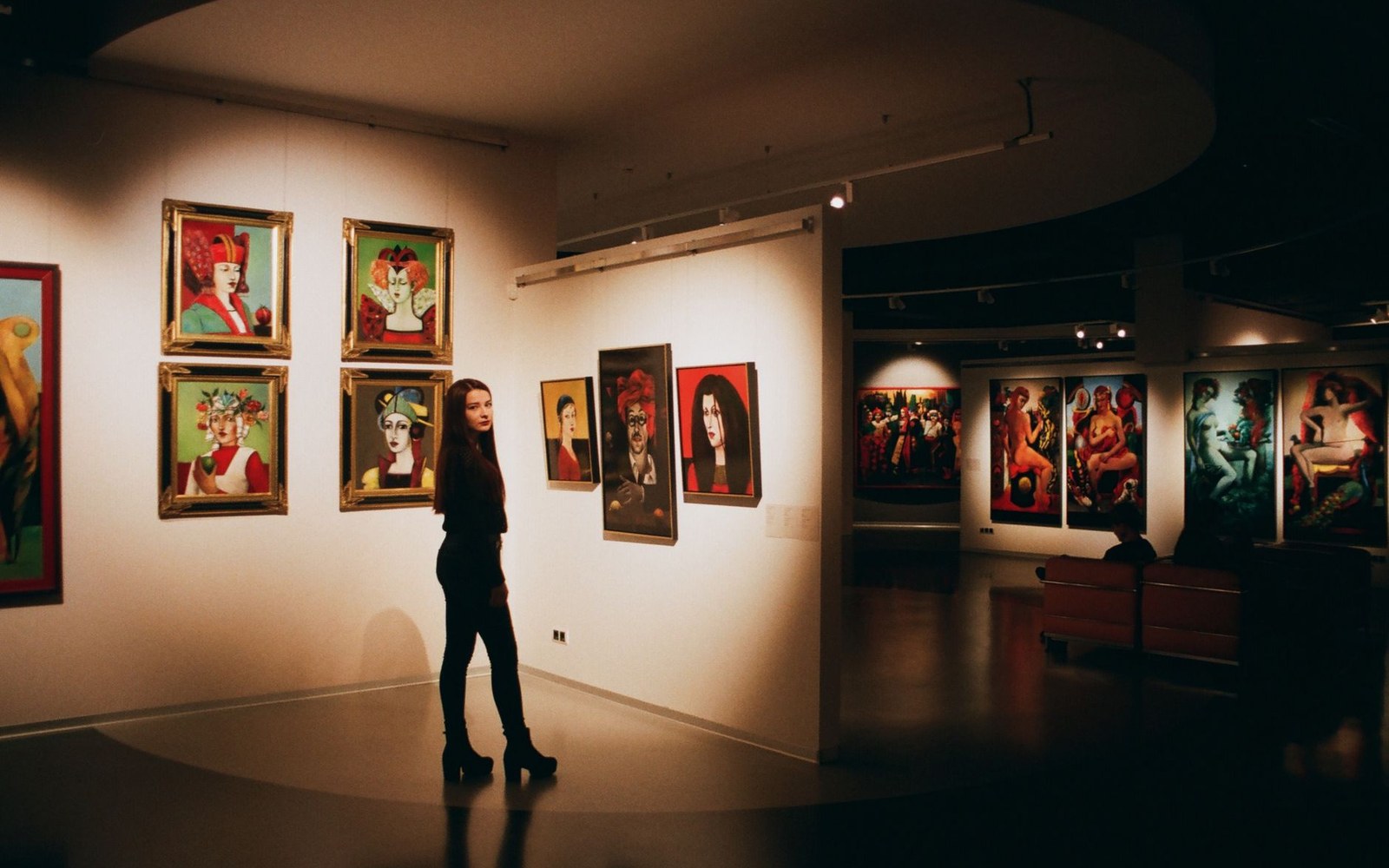
Contemporary hanging: the tradition’s unstated default is what Marshall’s canvases are arguing with.
Photo: Darya Sannikova / PexelsThe Scottish National Gallery of Modern Art in Edinburgh ↗ holds work by Saville and has addressed her practice in exhibition contexts, situating her within a British figurative lineage that includes Lucian Freud and Francis Bacon — painters who also used scale and surface to produce a physical unease in the viewer. But where Freud's figures are typically observed with a cold, almost forensic patience, Saville's are painted at speed, the marks still carrying the pressure of the hand, impasto thickening at the folds and compressions of the body.
The result is a practice that belongs to the tradition of the monumental nude and simultaneously argues with every assumption that tradition rests on. The monumentality, here, is not a claim about beauty or ideal form. It is a claim about how much space a body is allowed to take up.