Alice Neel Painted People Who Did Not Come Out Looking Good
Unflattering likeness as a formal strategy: the portraits, the pregnant nudes, and the late self-portrait of a painter who had no interest in flattering anyone.

The apartment studio, the easel, and a sitter who has agreed to be seen accurately.
Photo: Anastasia Shuraeva / PexelsThe Sitter's Discomfort Was Not Incidental
Alice Neel worked in a period when expressionist figuration had largely been declared finished, and she worked anyway, in a small apartment on the Upper West Side, painting whoever came through the door. The results are among the most disquieting likenesses in twentieth-century American painting — not because Neel was hostile toward her sitters, but because she refused to absorb the conventions that soften portraiture into a social contract. The discomfort in her pictures was structural.
Her method was direct and unmediated: thin, confident lines in charcoal or paint that fixed the peculiarities of a body before any instinct toward grace could intervene. Jaw lines slacken. Flesh redistributes. Color goes where observation sends it rather than where decorum would place it. The result is that sitters arrive on the canvas already slightly more themselves than they might have wanted — not caricatured, but unspared.
The Portraits, and What They Refuse to Do
The 1970 portrait of Andy Warhol in the collection of the Whitney Museum of American Art is among the most cited examples, partly because the sitter's celebrity makes the painting's refusals legible. Warhol is shown with his eyes closed and his torso exposed, a surgical corset binding his abdomen — the consequence of the shooting by Valerie Solanas in 1968. His skin is rendered in greens and mauves, his damaged body treated with the same unflinching inventory she brought to any other subject. There is no distance, no irony, no aestheticizing of the wound. The painting is specific and quietly devastating.
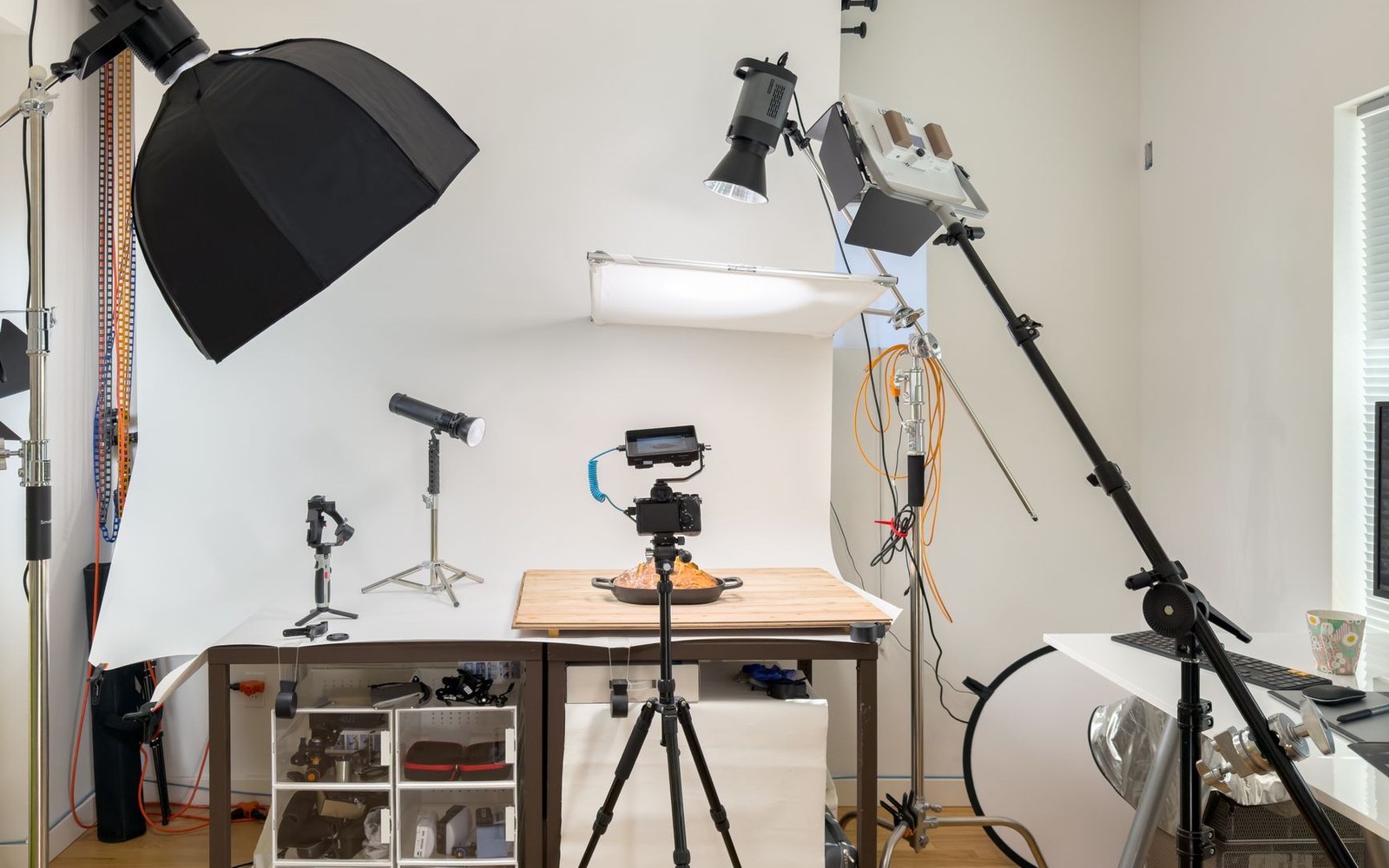
Two adult models, studio floods, and a frame that will crop the heads. — Philip Pearlstein Cropped the Head and the Problem Got Easier.
Photo: Frank Schrader / PexelsWhat Neel was doing across this period was insisting that the life class tradition — the figure observed without editorial interference — applied to portraiture too. Painters trained in academic figure drawing were expected to record the body as it presented itself; Neel extended that discipline to faces, ages, and bodies that the portrait tradition had habitually corrected. Pregnant women appear repeatedly in her work from the 1960s onward, their abdomens heavy and unidealized, their expressions ranging from exhaustion to composure. These pictures were unusual enough at the time that they had almost no precedents to stand beside.
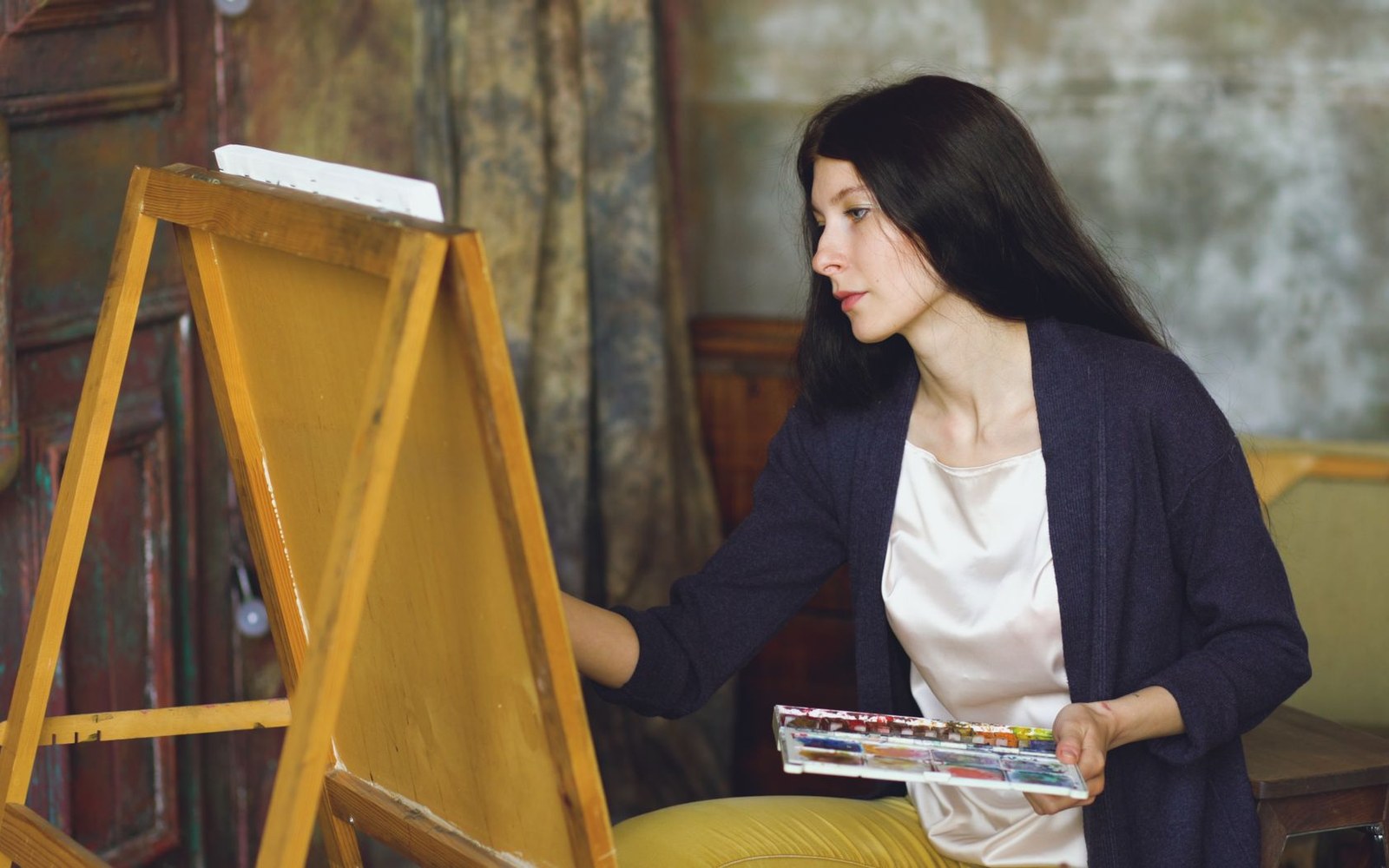
North light, a loaded palette, a model on the stand: the working arrangement the academies formalised and the studios kept.
Photo: Vitaly Gariev / PexelsThe pregnant nudes are formally deliberate. Neel seats or reclines her subjects in poses that echo the long tradition of the Western nude — the recumbent figure, the supported head — but the bodies are those of specific women in late pregnancy, not allegorized fertility. Édouard Manet's Olympia had forced contemporary flesh into a classical frame; Neel's pregnant women do something related but less confrontational, their power coming from quiet insistence rather than provocation.
Close enough that the paint stops describing a person.
Photo: Polina ⠀ / PexelsThe Self-Portrait at Eighty
The timing is its own commentary on how long the tradition she was working in took to recognize what she was doing with it.
In 1980, at eighty years old, Neel painted herself ↗ in a striped armchair, nude. The work is in the collection of the National Portrait Gallery, Smithsonian Institution. She holds a brush and a cloth, and she looks directly at the painter — which is to say, directly at herself, and directly out at the viewer. The body is painted with the same descriptive frankness she had given everyone else: the skin shows its age, the form has shifted from any earlier standard of idealized female nakedness, and none of this is offered apologetically.
What makes the self-portrait more than a gesture is its formal assurance. The color in the body — the mauves, the yellows, the greens working through the skin tones — is as considered as Neel's handling of any commissioned sitter ↗. She is not documenting decline; she is making a painting, and the painting is excellent. The self-portrait gathers up the whole of her career's argument: that rigorous observation applied without flinching to any subject, including the painter herself, is not cruelty. It is the job.
Neel received a retrospective at the Whitney only in 1974, when she was in her mid-seventies. The timing is its own commentary on how long the tradition she was working in took to recognize what she was doing with it.