Lead White: Why the Best Ground Is Also the Most Dangerous
Every Renaissance primer knew what lead white did. Mixed into an oil ground, it created a surface dense enough to take glazes, flexible enough to resist cracking across centuries, and reflective enough to push luminosity up through every layer above it. The history of European painting on canvas is, in large part, the history of this one pigment.
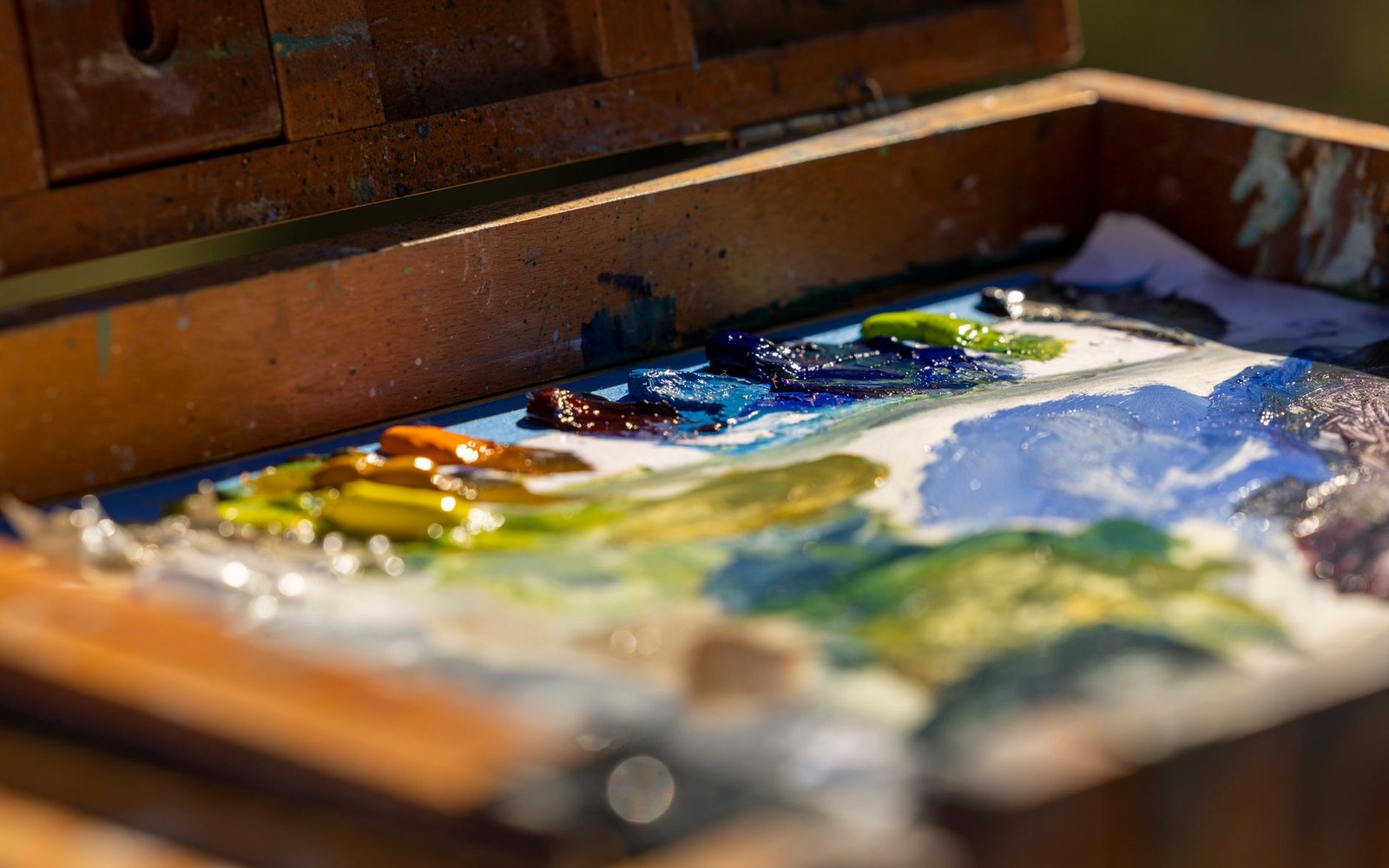
Lead white on the knife — dense, slow-drying, and the reason so many old grounds still hold.
Photo: Stephen Leonardi / PexelsThe material that built European painting came with a body count
Lead white is basic lead carbonate — the chemical result of exposing metallic lead to acetic acid vapour and carbon dioxide over several weeks. The oldest method, called the Dutch or stack process, produced irregular particles that painters prized for exactly their irregularity: the variation in crystal size gave the dry paint film an optical liveliness that more uniform modern whites cannot replicate. Two commercial forms dominate the historical record. Flake white is lead white bound in linseed oil and sold as a paste; Cremnitz white (sometimes Kremser white) uses a purer grade of the carbonate — typically less basic lead sulfate mixed in — and is traditionally bound in poppy or walnut oil for a slightly stiffer, more granular feel. The difference is real but small; painters argue about it with genuine intensity.
The toxicology was not unknown even in the seventeenth century. Bernardino Ramazzini's De Morbis Artificum Diatriba of 1700 — the founding text of occupational medicine — described the tremors, colic, and paralysis observed in painters exposed to lead pigments over working lifetimes. The compound enters the body by inhalation of dust and by skin absorption; it accumulates in bone and soft tissue and does not leave. Chronic low-level exposure produces effects that were, for centuries, simply the expected cost of the trade. The pigment's persistence in European studios long after the danger was established is partly habit, partly commercial inertia, and partly the genuine fact that nothing else performed identically.
Regulatory pressure in Europe eventually produced hard limits. The European Chemicals Agency classified lead carbonate under the REACH framework, and Regulation (EC) No 1907/2006 governs its handling ↗ across member states. By 2023, the sale of lead white to the general public in the EU is subject to significant restrictions: it remains available to professional users under specific conditions, but the casual retail channel has effectively closed for most European buyers. Manufacturers selling into European markets must label the product with acute and chronic toxicity designations and restrict packaging to professional quantities.

Raking light across an unprimed weave: the tooth a ground has to sit on.
Photo: Jonathan Borba / PexelsSeveral manufacturers still produce lead white for artists, among them: Williamsburg Handmade Oil Colors (now part of Golden Artist Colors), Michael Harding, and Old Holland. Each sources its lead carbonate through regulated industrial supply chains and sells the paint in professional-grade quantities with full hazard documentation. None markets the product as a beginner's material, and none sells it through the same channels as standard titanium-white house paint. Old Holland's formulation uses the traditional stack-process particle structure that the company traces to its seventeenth-century origins; Michael Harding's version is stiff-bodied and intended for direct use in grounds and underpainting. Williamsburg's offering sits between the two in consistency.

Unprimed linen, still sold by the metre off the same Belgian looms.
Photo: cottonbro studio / PexelsWhat makes lead white irreplaceable in the eyes of painters who still use it is not nostalgia. It forms a particularly flexible, durable paint film, and it dries reliably even in thin layers, qualities that titanium white, the standard modern substitute, does not fully match. It also has a natural siccative effect, accelerating the drying of other pigments mixed with it. And unlike titanium white, which tends to make mixtures chalky and opaque, lead white maintains translucency at high tints, which is why it remained the ground of choice from Titian's Venus of Urbino through Vermeer, Velázquez, and well into the nineteenth century.
The painter who uses it today does so with documentation, ventilation, a clean studio protocol, and a clear understanding that the regulatory landscape continues to tighten. The pigment's record across five centuries is remarkable. So is its capacity for harm.