The Royal Academy Opens the Life Class to Women — with Conditions
The Royal Academy Schools admitted women to the life class in 1893 — which sounds like progress, and was, in the narrowest sense. The conditions attached made the boundary visible. Female students drew from the undraped model only in separate sessions, segregated from the men. For some years the model was required to be partially draped: a cloth or loincloth preserved the arrangement that kept women from full parity with their male counterparts, who had worked from the complete figure since the Schools opened in 1769. The argument offered was propriety; the effect was a tiered curriculum in which women were officially enrolled but systematically undertrained for the central discipline of academic figure work.
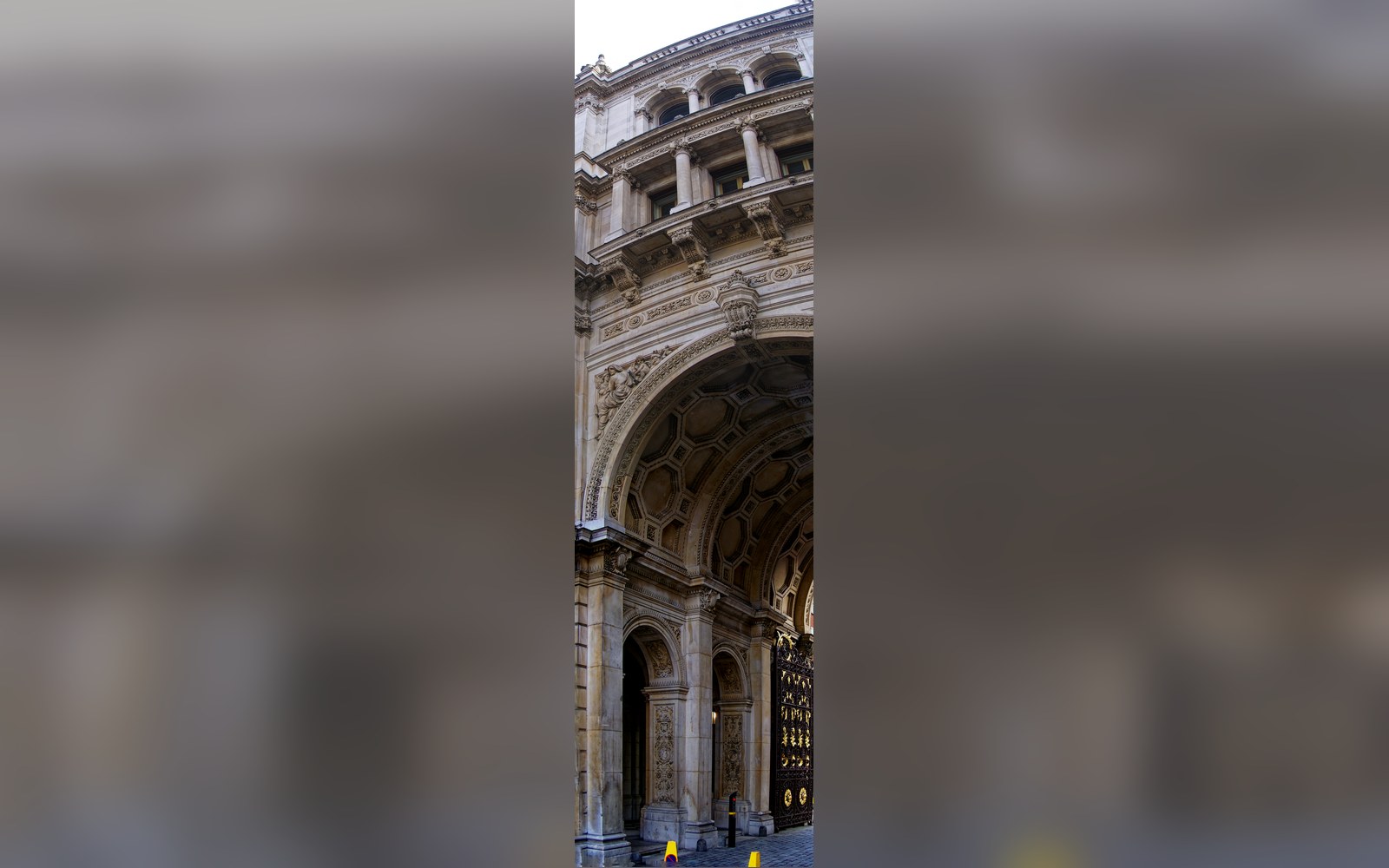
Burlington House, where the Schools’ 1893 decision was taken and the conditions attached.
Photo: London - Entrance Gate Royal Academy of Arts - ICE Fisheye · Wikimedia CommonsHalf a Door, Carefully Held Ajar
This was not unique to London. The École des Beaux-Arts ↗ in Paris held the same line for longer — women were not admitted to its life classes at all until 1897 — while the Académie Royale had excluded women from full membership almost from its founding. The pattern across European academies was consistent: access granted late, access qualified, the qualification rarely examined too closely.
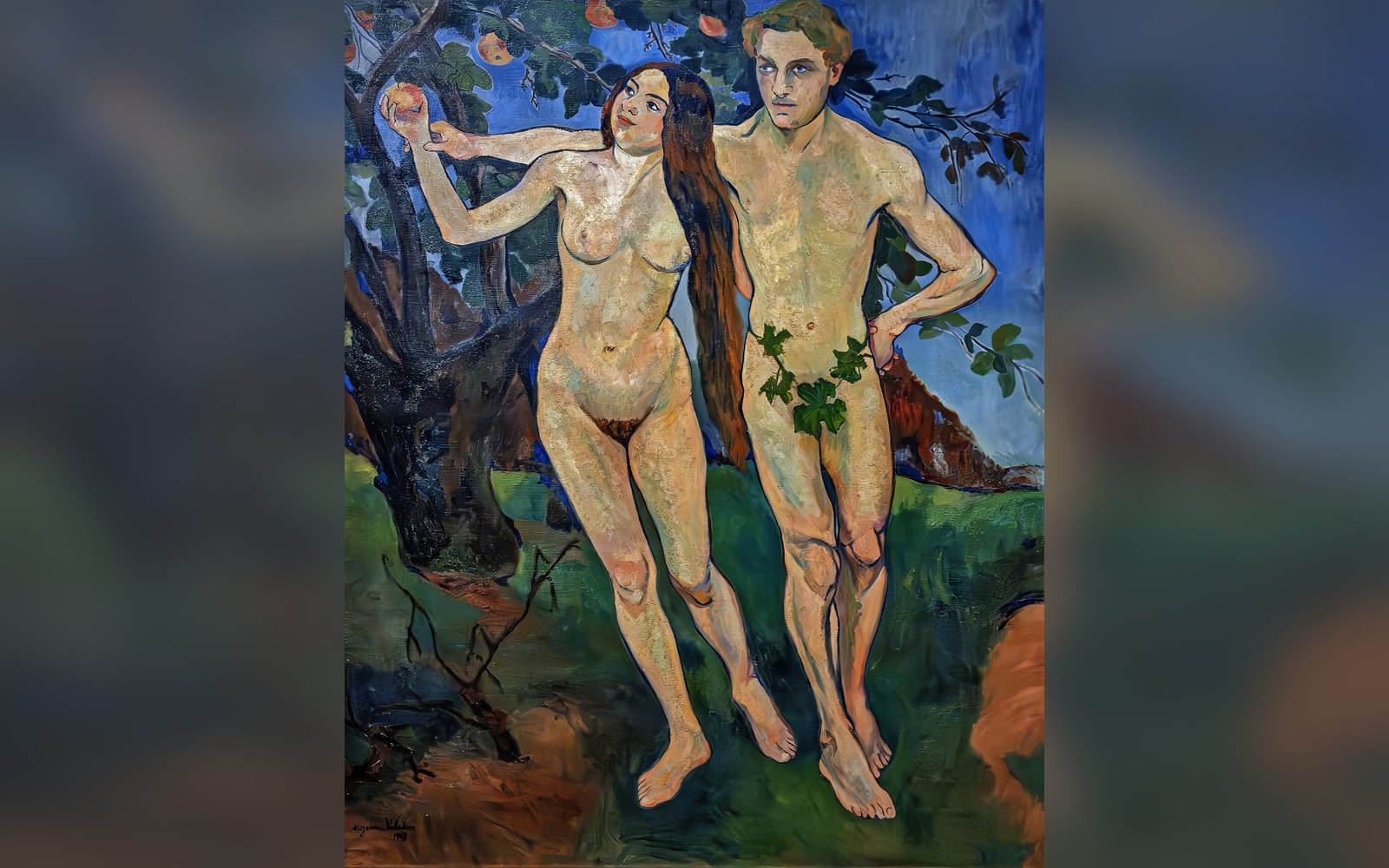
Valadon’s Adam and Eve, 1909 — a male nude painted by a woman who had spent years as somebody else’s model. — Suzanne Valadon Painted the Male Nude When Nobody Had Asked Her To.
Photo: (Barcelona) L'été ou Adam et Eve - Suzanne Valadon - Musée national d'Art moderne Paris · Wikimedia CommonsLaura Knight, who trained at Nottingham School of Art rather than the Royal Academy Schools, understood well what restrictions like these signified for women artists. Her 1913 Self Portrait with Nude, now in the National Portrait Gallery, London, addresses that history with a precision no manifesto could match. Knight paints herself from behind, standing at a canvas, dressed in her working clothes — and in front of her stands Ella Louise Naper, fully undraped, facing the light. The painting insists on what women had been told they could not properly see, could not professionally handle: the unmediated figure, studied straight on, in a professional studio context. Knight is not in the picture as a woman being looked at; she is in it as a painter doing the looking. The reversal is quiet and total.
The composition also sidesteps any reading of the nude as spectacle by foregrounding the act of depiction itself. Paint, canvas, the back of the artist's head: the machinery of the studio is the subject. What the painting argues — without argument ↗ — is that access to the figure, and the ability to make serious work from it, were never a question of propriety. They were a question of power.
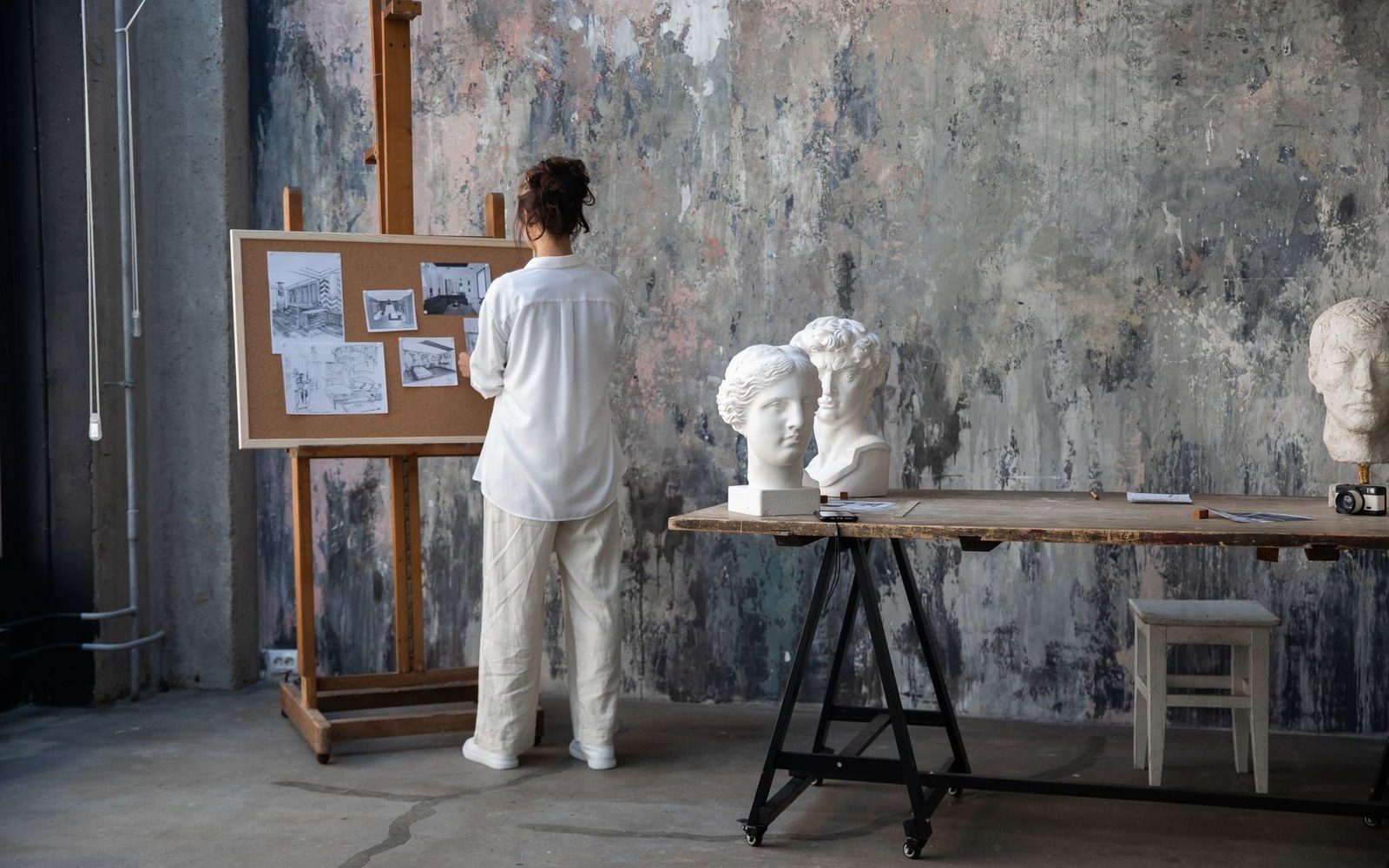
A wall of charcoal studies — the académie as a body of work.
Photo: KATRIN BOLOVTSOVA / Pexels