Two Years in the Studio, a Fortnight of Shouting, and the Whole Argument Was Over
In the spring of 1863, the Salon jury rejected roughly half of the works submitted to it — more than two thousand paintings, drawings and sculptures turned away in a single season. The number was not unprecedented, but the scale of the outcry among artists was loud enough to reach the Tuileries. Napoleon III, emperor and occasional arbiter of artistic taste, visited the Palais de l'Industrie on 22 April to inspect the rejected works himself. What he saw, or what he chose to appear to see, was a question of fairness. His solution, announced that same month, was characteristically theatrical: a parallel exhibition would be held in the same building, in adjacent galleries, and the rejected artists could show their work to the public, who would judge for themselves.
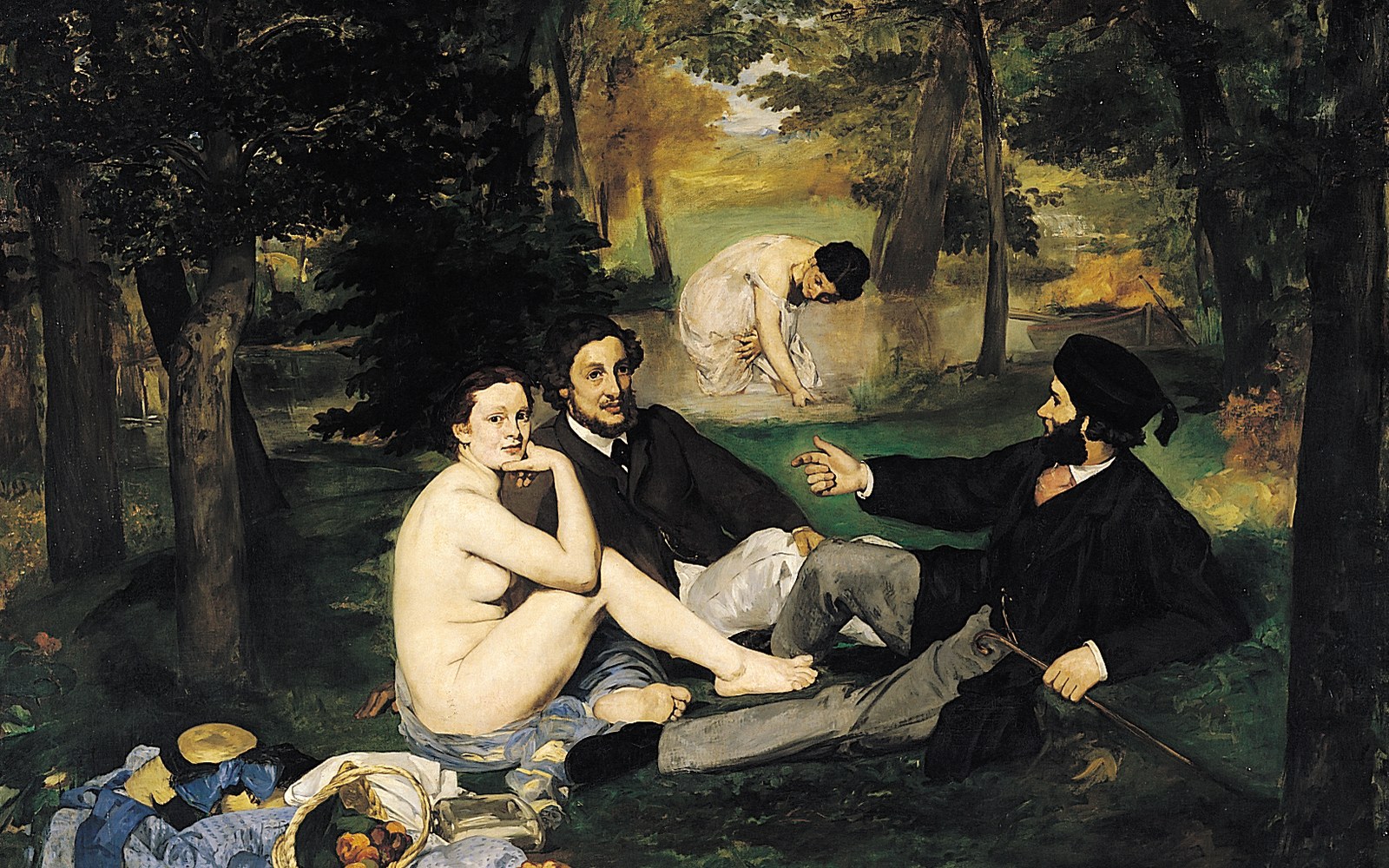
The picture that carried the Refusés: two dressed men, one undressed woman, and a bather at the back.
Photo: Édouard Manet - Le Déjeuner sur l'herbe · Wikimedia CommonsThe decree nobody expected
The Salon des Refusés opened on 15 May 1863, two weeks after the official Salon. The decree ↗ did not invent a new institution — it cleared a temporary space, offered artists the right to participate or decline, and then stepped back. Many artists, wary of the humiliation that the refusal label carried, did decline. Those who accepted numbered in the hundreds, and what they hung produced one of the more consequential fortnights in the history of Western painting.
What was actually on the walls
The work that drew the largest crowd and the loudest noise was Édouard Manet's large canvas then titled Le Bain — now known as Le Déjeuner sur l'herbe ↗. The picture measures roughly 208 by 265 centimetres and had occupied Manet for the better part of the previous two years. Its composition borrows freely from Raphael by way of Marcantonio Raimondi's engraving after the Judgment of Paris, a pedigree Manet almost certainly expected educated viewers to locate. Two men in contemporary dress sit with two women in a forest clearing; one woman bathes in the background; the other sits entirely unclothed in the foreground and looks directly out at the viewer. The outrage was not the nude, which the Salon hung without difficulty when the flesh in question was allegorical — Venus, a nymph, a historical figure safely distant in time. It was the combination: modern clothes on the men, a woman whose body bore no mythological alibi, and a gaze that addressed the viewer without apology. The jury had refused it not on technical grounds but on precisely this moral and representational logic, and the public at the Refusés confirmed the jury's discomfort by arriving in large numbers to be scandalized by the same thing.
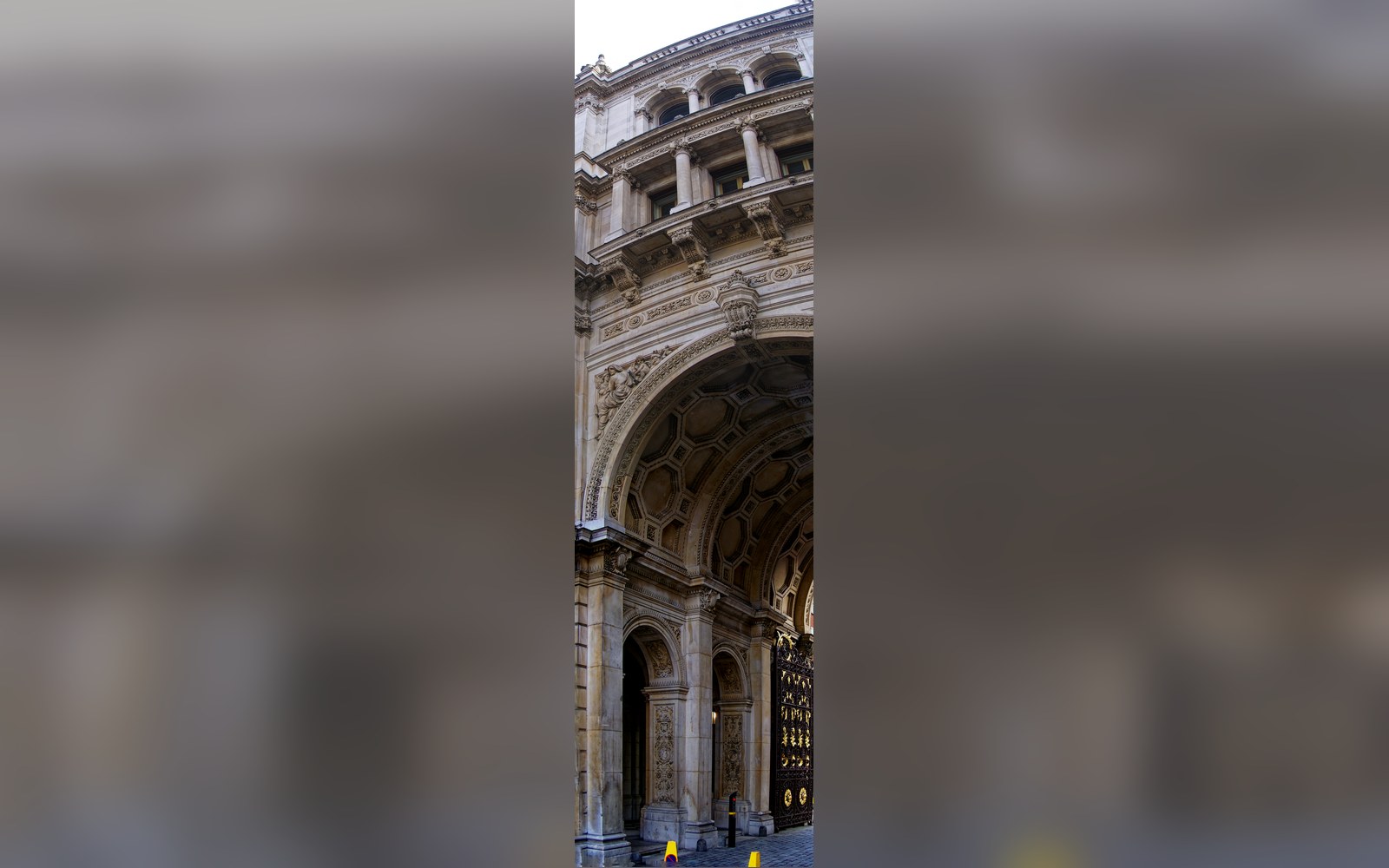
Burlington House, where the Schools’ 1893 decision was taken and the conditions attached. — The Royal Academy Opens the Life Class to Women — with Conditions.
Photo: London - Entrance Gate Royal Academy of Arts - ICE Fisheye · Wikimedia CommonsAlongside Manet, James McNeill Whistler showed Symphony in White, No. 1: The White Girl (now in the National Gallery of Art, Washington), a full-length figure of a woman in white that had already been refused by the Royal Academy in London the previous year. Camille Pissarro had work in the exhibition, then still in his early thirties and largely unknown. Hundreds of lesser-remembered painters crowded the adjacent walls, and the press treated the exhibition as a spectacle of failure — evidence, most critics assumed, that the jury's rejections had been essentially correct.
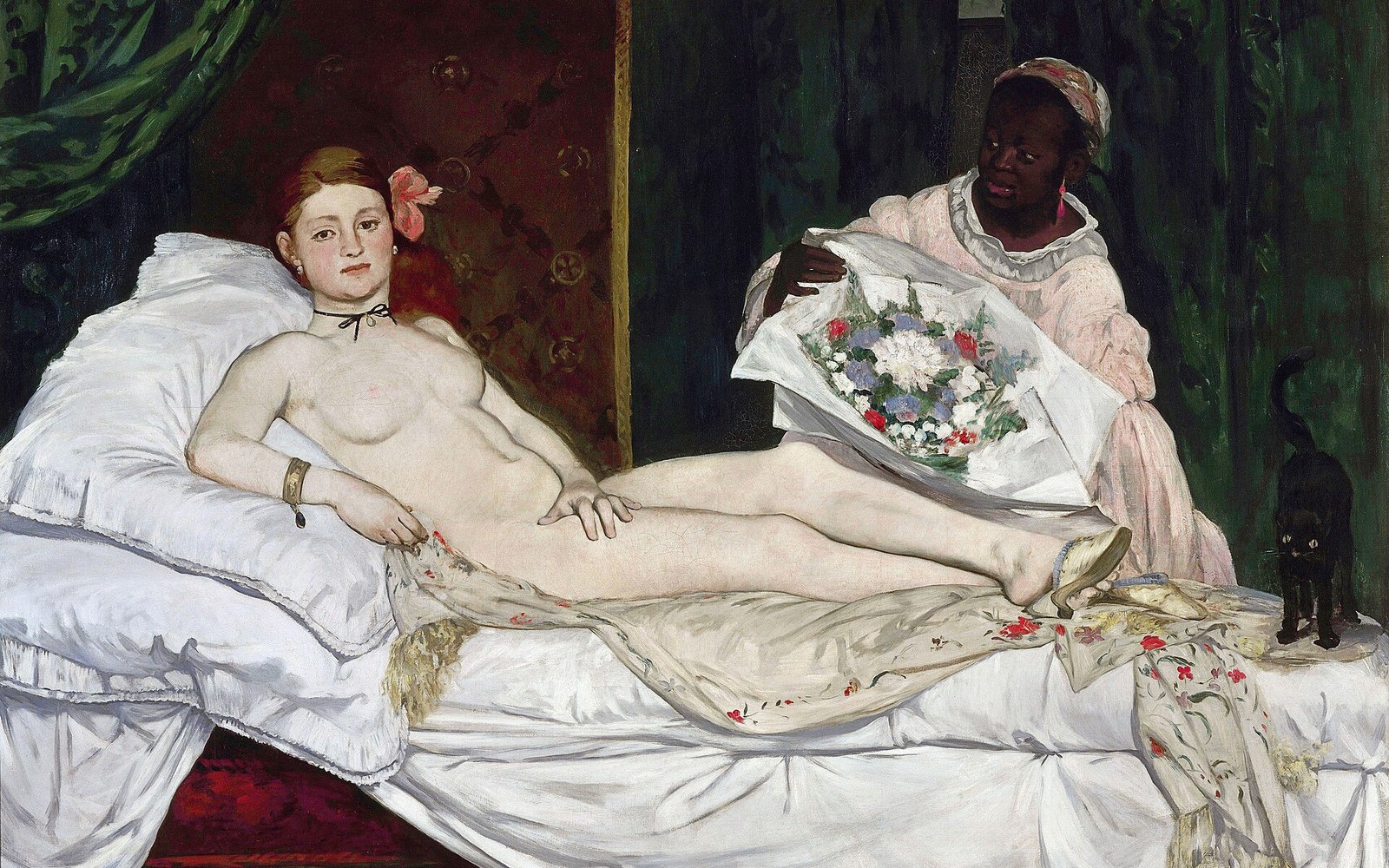
Olympia on the wall at the Musée d’Orsay, where the picture has hung since 1986.
Photo: Edouard Manet - Olympia - Google Art ProjectFXD · Wikimedia CommonsWhy the fortnight changed the calculation
A wall of charcoal studies — the académie as a body of work.
Photo: KATRIN BOLOVTSOVA / PexelsWhat shifted was not critical opinion but structural logic. Before 1863, a Salon rejection was primarily an administrative verdict with economic consequences: no Salon showing meant no sales to the collectors and state buyers who moved through those rooms, no critical notice, no presence in the market. A rejected painter might argue privately that the jury was wrong, but the argument had nowhere public to land. The Refusés changed that geometry. It created a visible, attended, written-about space in which a rejected work could be seen on the same day, in the same building, by the same audience. The jury's authority over what constituted exhibitable painting was suddenly something a viewer could contest in person, canvas to canvas.
The Salon des Indépendants, founded in 1884 without a jury or prizes, was the institutional conclusion of the argument that 1863 had opened.
Manet did not want to be seen as a rebel. He had submitted Le Bain to the Salon in the expectation that the institutional endorsement mattered, and the rejection stung. But the attention the Refusés generated — the crowds, the commentary, the way critics who dismissed the painting still found they had to describe it at length — demonstrated that a refusal, publicly staged, could generate more discussion than an acceptance. This was a new kind of career fact. The Académie Royale de Peinture et de Sculpture had spent generations calibrating what the morceau de réception and the Salon submission were supposed to mean for a painter's standing; in a fortnight, the Refusés made visible that the Salon's monopoly on meaningful public exposure was not absolute.
The 1863 exhibition was not repeated as a permanent institution. Napoleon III's gesture was one-off and pragmatic. But the pressure on the Salon system accumulated, and by the time the Impressionists organized their first independent exhibition in 1874, they were working within a logic the Refusés had made available: that a painter could build a public reputation entirely outside the Salon's frame. The Salon des Indépendants, founded in 1884 without a jury or prizes, was the institutional conclusion of the argument that 1863 had opened.
What makes the Refusés more than a footnote is the specific weight of the painting at its center. Le Déjeuner sur l'herbe is now in the Musée d'Orsay, where it has occupied a position in the permanent collection for decades, the kind of painting that people arrange trips around. The jury that rejected it is not remembered for anything else. The showing in the adjacent gallery — the one audiences walked into expecting to find failures — turned out to be the room where the next fifty years of French painting were already visible, not yet named.