Rembrandt Gave Bathsheba a Real Letter
How a small rectangle of paper in a woman's hand shifts the entire weight of a painting
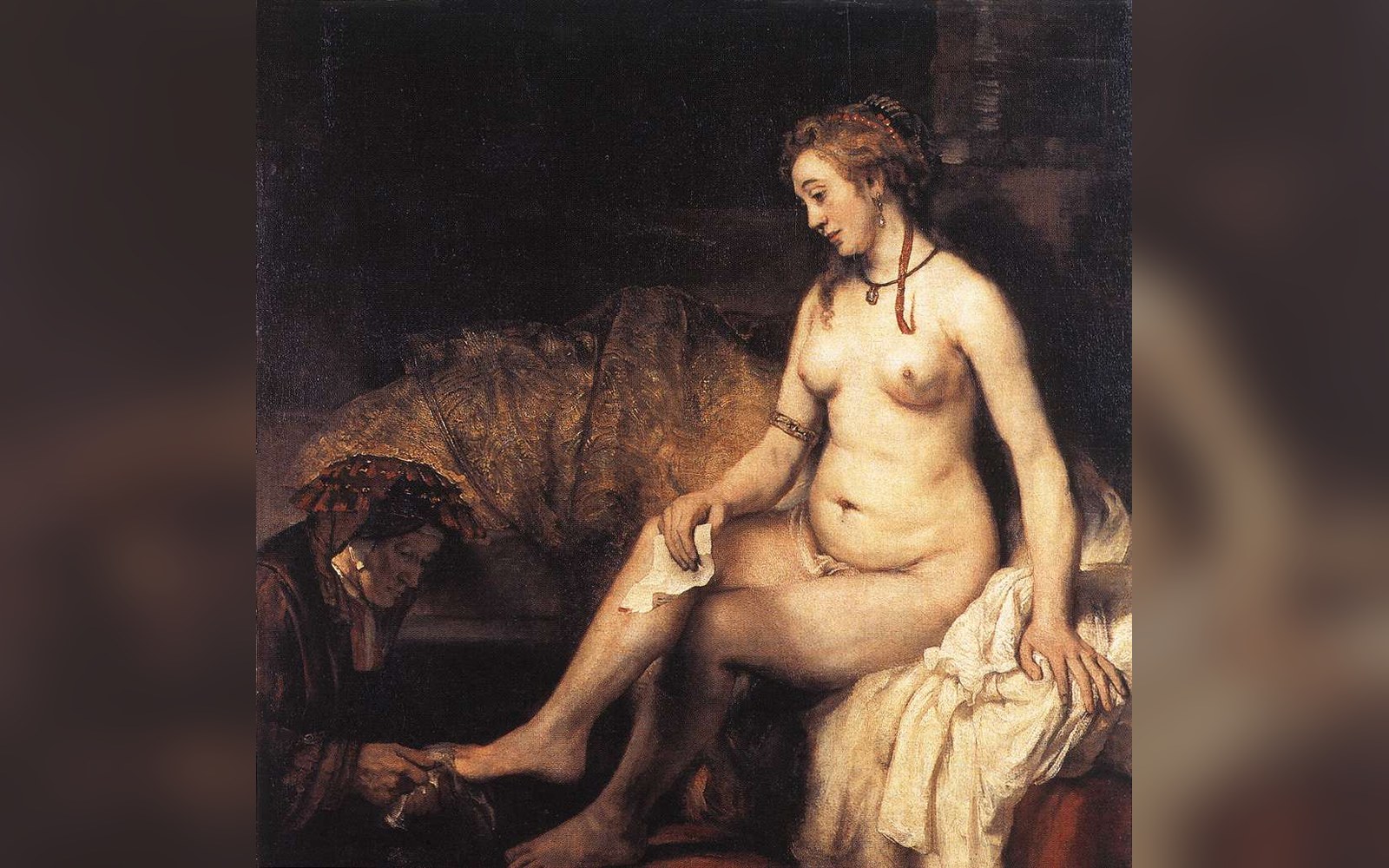
Rembrandt, 1654. The letter in her hand is what the pose is thinking about.
Photo: Rembrandt - Bathsheba at Her Bath - WGA19090 · Wikimedia CommonsThe Problem on Her Face
The Bathsheba at Her Bath of 1654 — oil on canvas, 142 × 142 cm, now in the Louvre — is built around an impossibility that Rembrandt then proceeds to solve. The subject is the moment before Bathsheba decides: she holds King David's letter summoning her to court, knowing what compliance will mean. Depicting that moment in a static medium requires that a face carry past, present, and anticipated future simultaneously. Most painters who attempted the story simply did not try. They gave Bathsheba a handmaiden, a distant rooftop, an architectural prop — anything to make the narrative legible through action. Rembrandt removes all of that and puts the weight where it belongs: on her expression, and on the letter.
The letter is not a symbol or a prop. It is specific — a creased document held loosely in her right hand, already read, not being read. The distinction matters enormously. Bathsheba is not in the act of receiving news; she is sitting with what it means. That subtle displacement in time — the message received, the response not yet given — is what makes the picture's psychology possible. A woman caught mid-reading could be depicted with curiosity or shock. A woman who has finished reading can only be depicted in consequence. Rembrandt chose the harder, quieter moment.
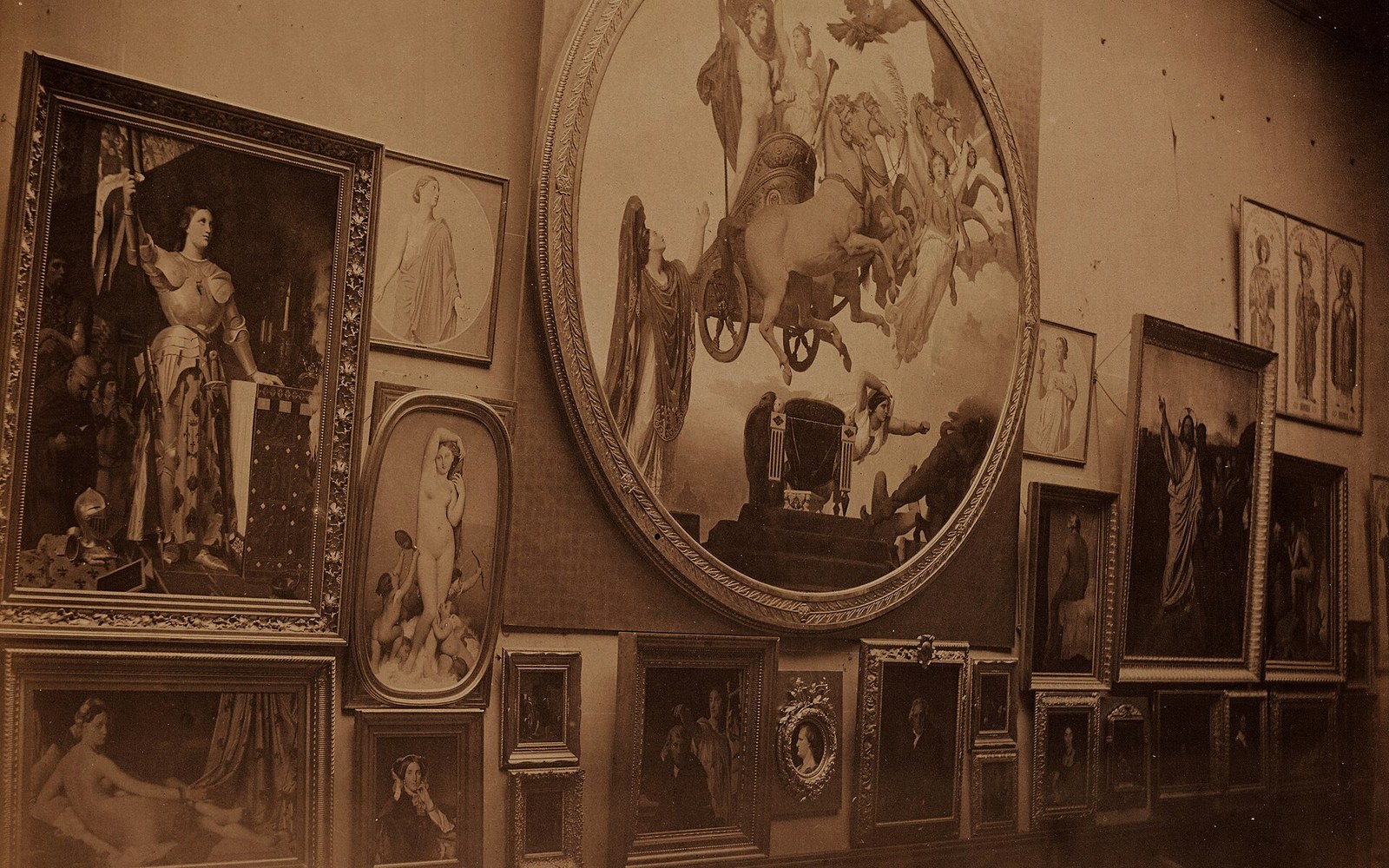
Ingres in the Beaux-Arts galleries, where his odalisque hung among the prize pictures the concours produced. — Ingres Gave Her Three Extra Vertebrae and Was Unapologetic.
Photo: Expo 1855 Disdéri galerie française Ingres f18 · Wikimedia CommonsWho Likely Sat for It

Close enough that the paint stops describing a person.
Photo: Polina ⠀ / PexelsThe model has been identified with near-universal scholarly agreement as Hendrickje Stoffels, the woman who lived with Rembrandt from around 1649 until her death in 1663. The identification rests partly on physiognomic comparison with other works from the same years and partly on circumstance: 1654 was the year the Reformed Church council in Amsterdam summoned Stoffels and censured her for living with Rembrandt outside of marriage. Whether that biographical coincidence inflected the painting's mood of reluctant compliance is a question the canvas raises without answering.
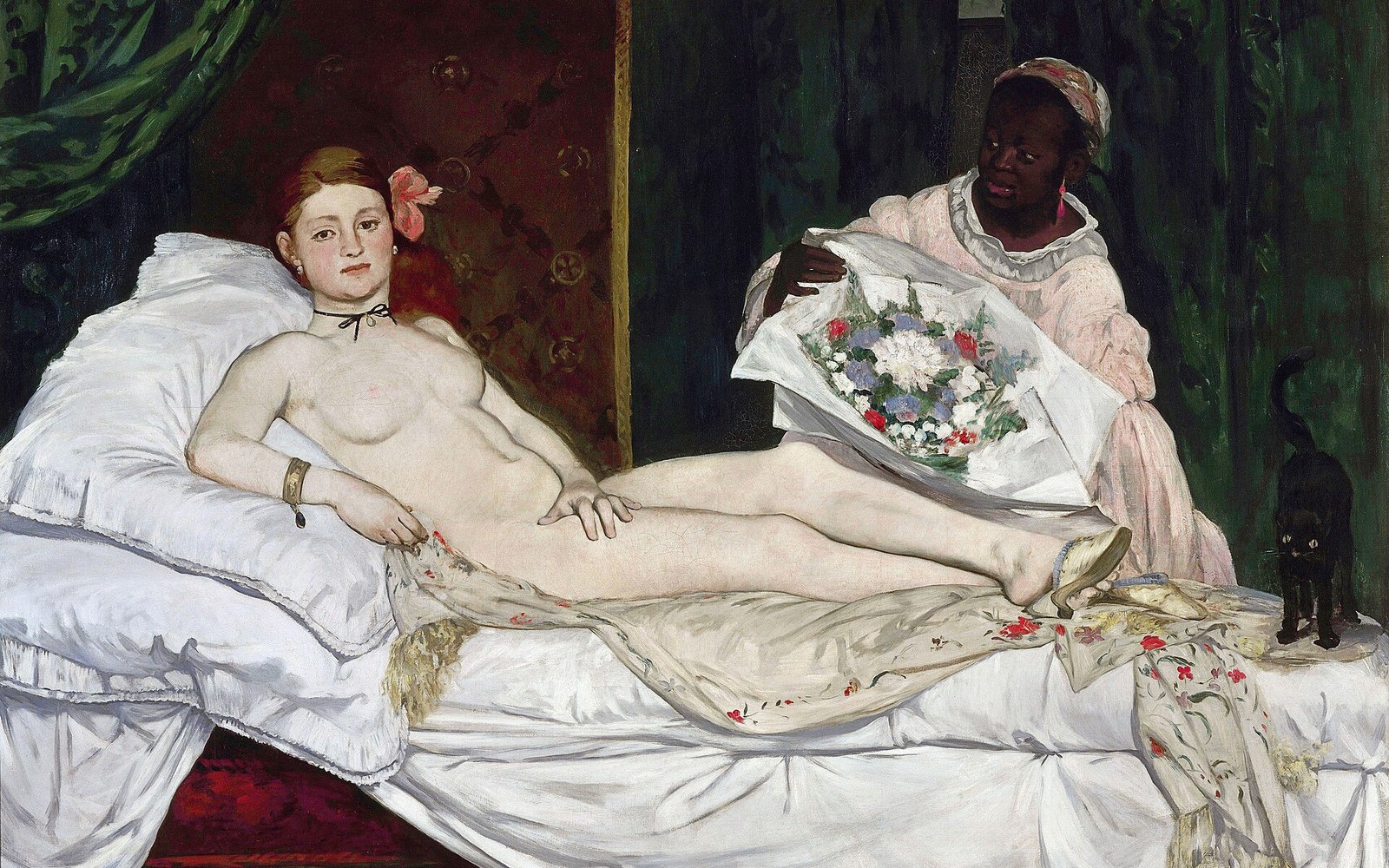
Olympia on the wall at the Musée d’Orsay, where the picture has hung since 1986.
Photo: Edouard Manet - Olympia - Google Art ProjectFXD · Wikimedia CommonsThe figure is painted with a directness that would have been striking in 1654. The body is observed rather than idealized — the abdomen soft, the left foot being dried by a handmaiden in a passage of extraordinary paint-handling — and the face carries none of the composed serenity that Italian and Flemish predecessors tended to project onto Old Testament women of beauty. This is a Bathsheba who looks as though something specific is weighing on her, not a figure arranged to be admired.
The canvas ground is warm, and the flesh passages build from dark to light in the manner Rembrandt had by then made entirely his own — shadow as depth, not as absence.
Technically, the picture belongs to Rembrandt's mature period, when his handling had moved decisively away from fine, layered finish toward impasto ↗ in the lights and open, dragged strokes in the mid-tones. The Louvre's own conservation records note a substantial pentimento in the head: Rembrandt altered the angle of Bathsheba's gaze during execution, a revision visible in infrared reflectography, suggesting that finding the exact quality of inward attention was not resolved at the outset. The canvas ground is warm, and the flesh passages build from dark to light in the manner Rembrandt had by then made entirely his own — shadow as depth, not as absence.
The condition the Louvre records is good for a canvas of its age, with some worn areas in the darker passages and old restorations that have been documented but largely left in place. At 142 centimetres square, the figure sits at roughly life size, which matters: the painting does not invite viewing from a distance. It requires proximity, and proximity returns the viewer to that face — to the stillness that Rembrandt managed to make feel like thought in progress, caught between a letter already read and a future not yet chosen.