Suzanne Valadon Painted the Male Nude When Nobody Had Asked Her To
The woman who had posed for Renoir and Toulouse-Lautrec picked up the brush and reversed the arrangement entirely.
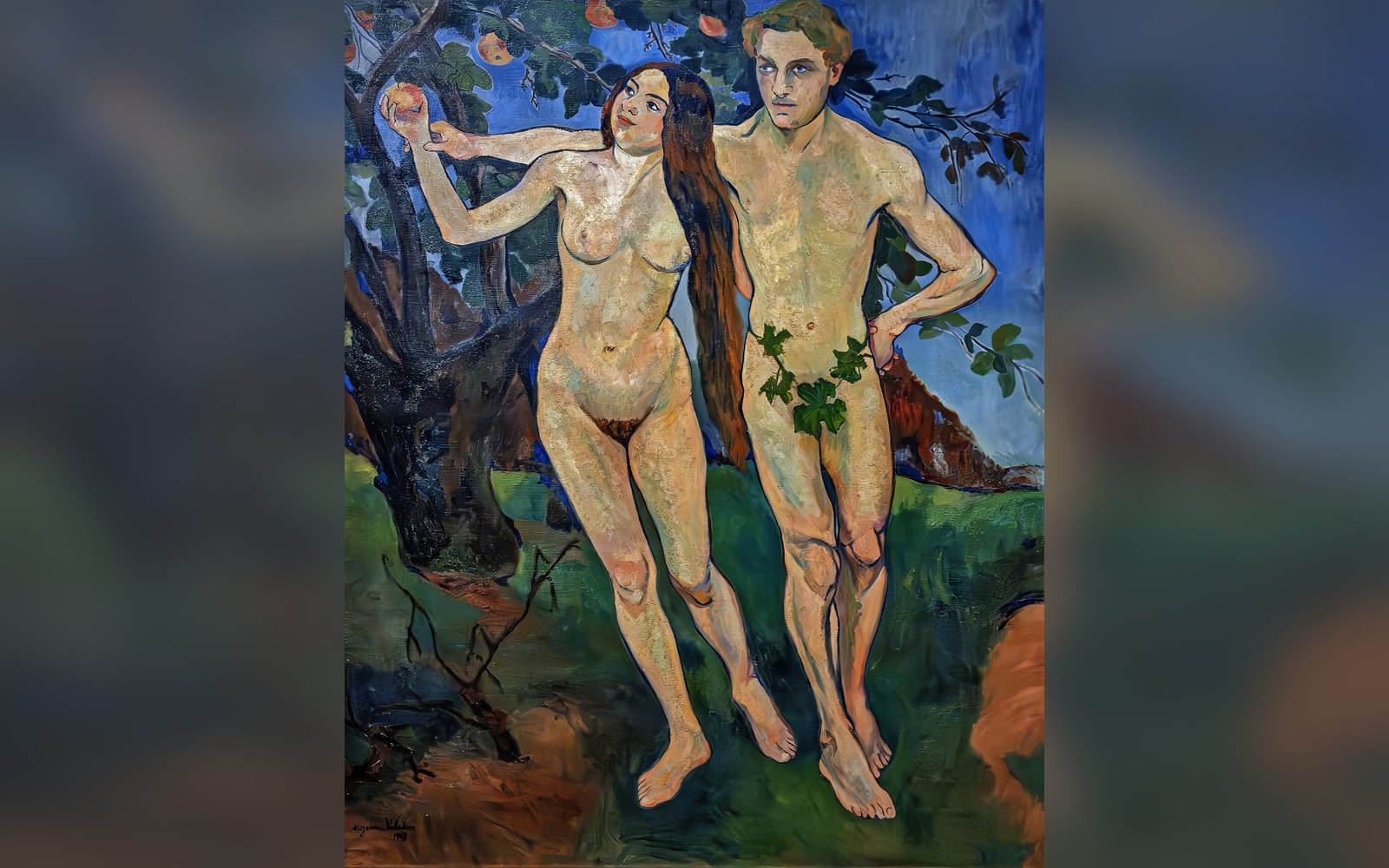
Valadon’s Adam and Eve, 1909 — a male nude painted by a woman who had spent years as somebody else’s model.
Photo: (Barcelona) L'été ou Adam et Eve - Suzanne Valadon - Musée national d'Art moderne Paris · Wikimedia CommonsOutside the Permission Structure
Suzanne Valadon never attended the École des Beaux-Arts, never sat the concours, never produced a morceau de réception. She arrived at painting not through institutional permission but through proximity — years spent posing in Montmartre studios gave her an education in how the figure was constructed, and then she constructed it herself. Edgar Degas, who saw her drawings in the early 1890s and encouraged her seriously, recognised something that the academies had no mechanism to produce: an eye trained from the other side of the easel.
Her background as a model did not leave her alone once she became a painter. Critics who wrote about her work in the first decade of the twentieth century reached for it constantly, as though the fact of her former poses explained the work rather than complicated it. What the framing missed was the specific quality of her observation — a directness with the nude body that owed nothing to the idealising conventions that academic training reinforced and that she had never been required to absorb.
The Reversed Gaze
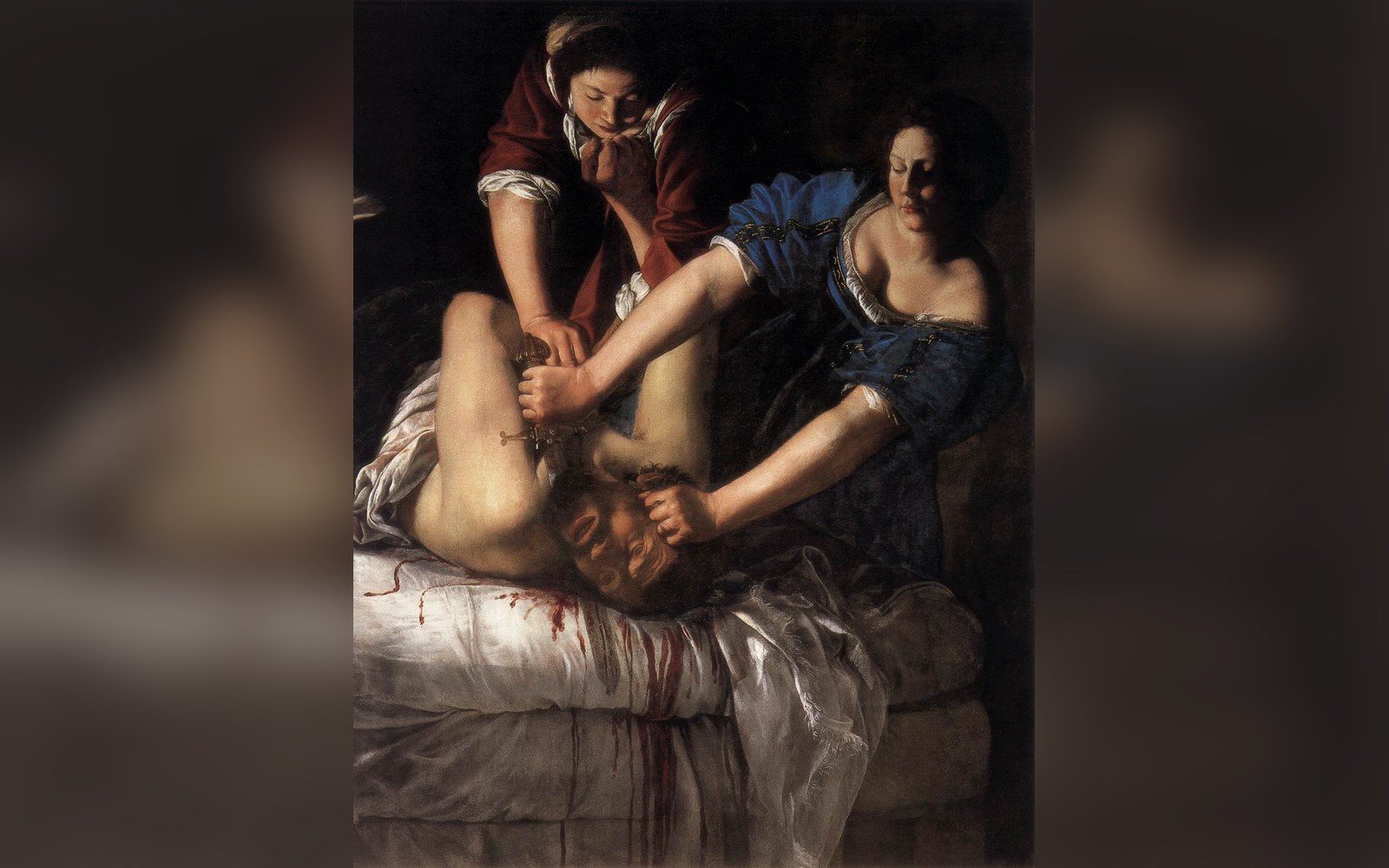
The Naples canvas: the arms are doing work, which is what separates it from Caravaggio’s. — Artemisia Gentileschi Painted the Beheading Twice, and the Second Was Worse.
Photo: Artemisia Gentileschi - Judith Beheading Holofernes - WGA8563 · Wikimedia CommonsThe male nudes are the most startling evidence of that directness. When Valadon began painting male figures — works from around 1909 onward — she was doing something for which there was almost no institutional precedent in French painting. The Académie Royale de Peinture et de Sculpture had organised the life class almost exclusively around the male figure, but it had organised that class for male students. The tradition of women painting unidealized male nudes as a central subject simply did not exist in any established form.
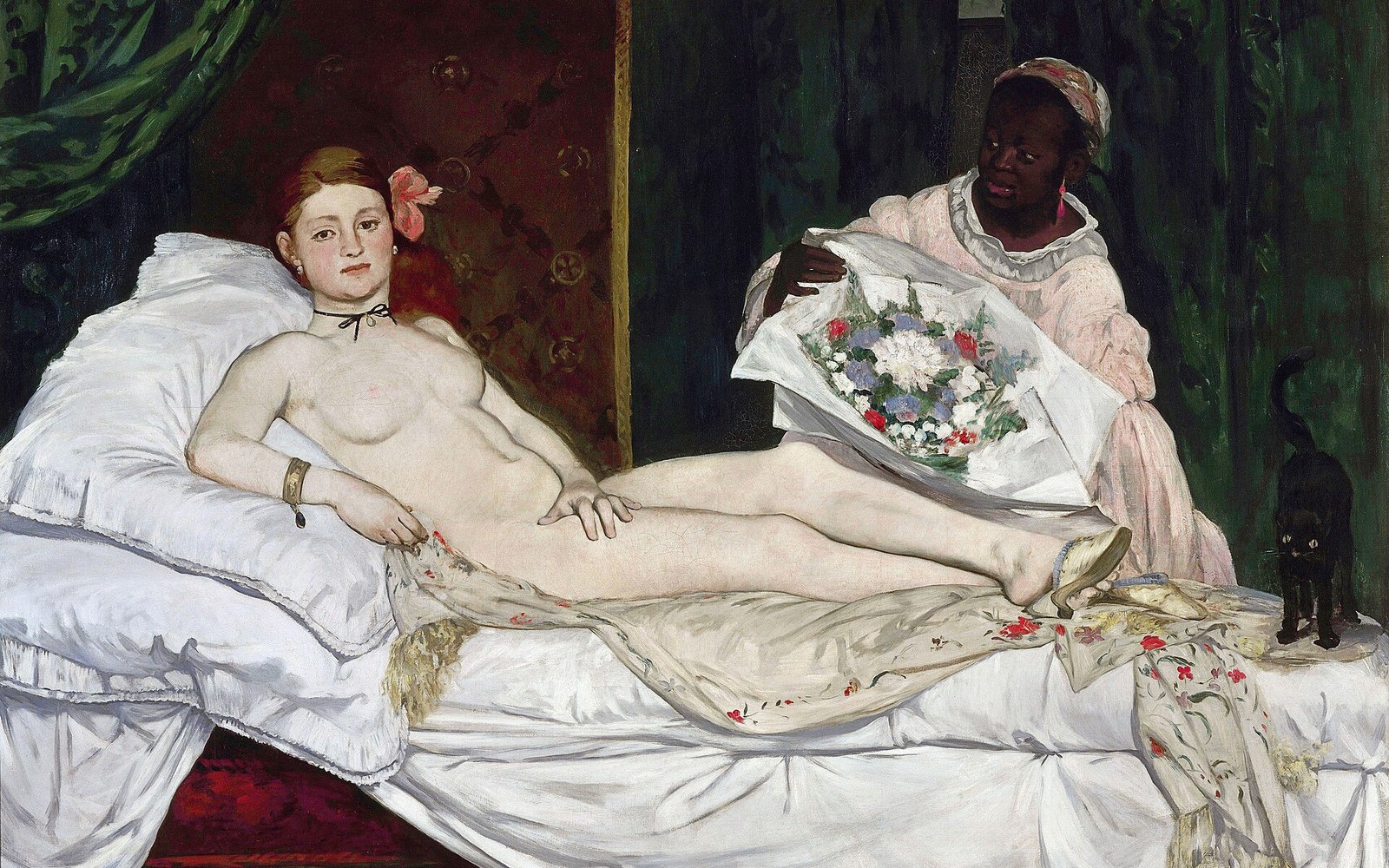
Olympia on the wall at the Musée d’Orsay, where the picture has hung since 1986.
Photo: Edouard Manet - Olympia - Google Art ProjectFXD · Wikimedia CommonsWhat Valadon produced in those paintings was not homage to a tradition she had been excluded from — it was something cooler than that. The bodies are observed without flattery and without anxiety. They occupy space in the same matter-of-fact way that a chair or a rumpled cloth occupies space. The poses carry no mythology, no narrative justification. A man sits; a man reclines; the body is there to be seen.
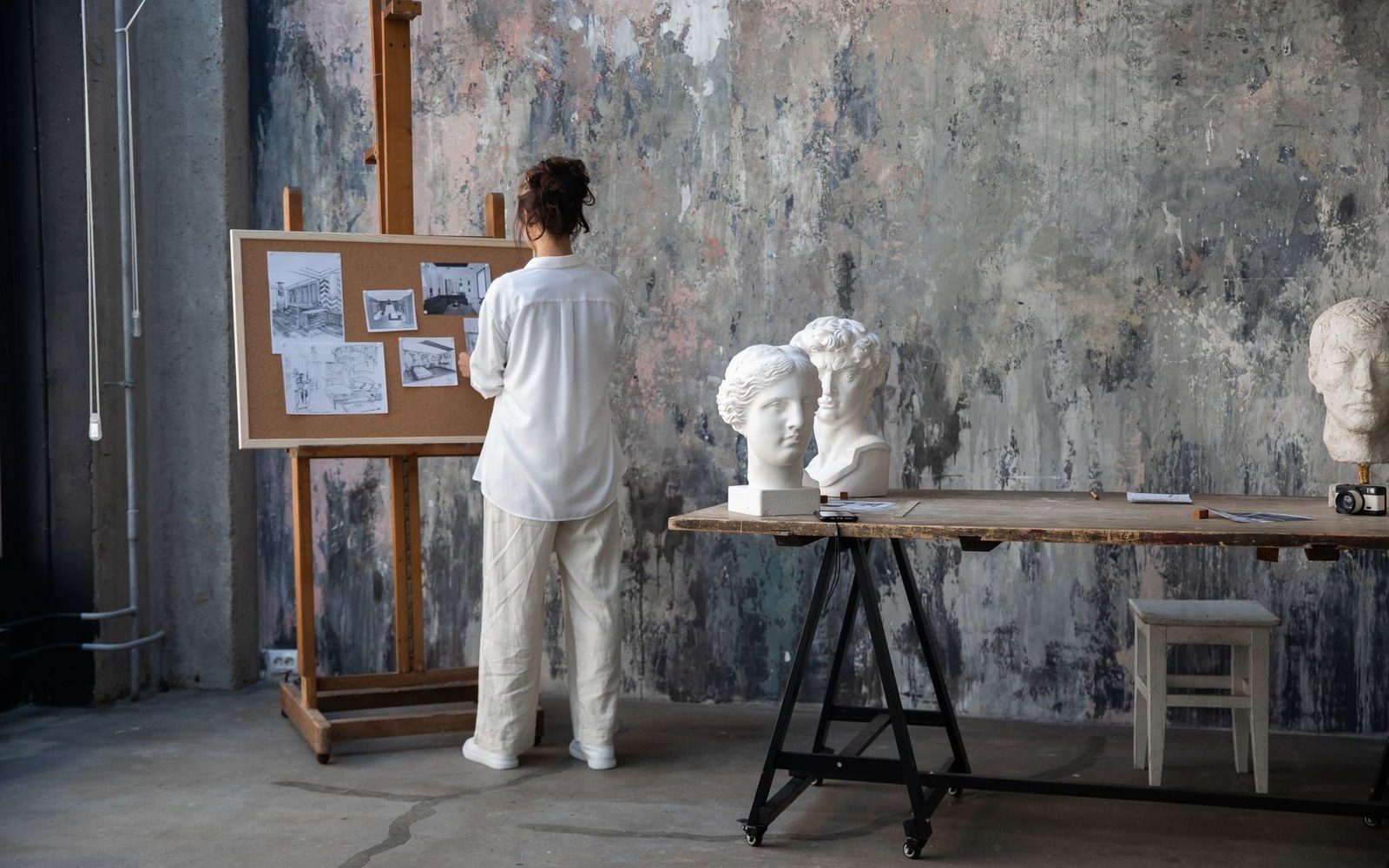
A wall of charcoal studies — the académie as a body of work.
Photo: KATRIN BOLOVTSOVA / PexelsHer bathers of the 1910s and 1920s extend the same logic to female figures, including her own. The self-portraits, which she made across several decades, share a quality that was rare in women's self-portraiture: they do not perform either modesty or transgression. The face looks back at the painter — at us — from a body that is neither apologized for nor displayed. The Musée national d'Art moderne in Paris, which holds her Adam and Eve of 1909, shows the tendency most plainly: her companion André Utter posed as Adam alongside Valadon's own Eve, and the picture distributes its scrutiny evenly across both figures without ranking them.
The face looks back at the painter — at us — from a body that is neither apologized for nor displayed.
Materials and Standing
What the institutions never quite processed was that her position outside them was not a deficit she had struggled against but a condition that shaped what she was able to see.
Valadon worked in oil with a line that remained throughout her career closer to drawing than to paint-handling in any conventional sense — a legacy, probably, of the charcoal and chalk work that Degas had first seen and praised. Her contours are hard where most painters of her generation softened them. The color underneath those outlines is often intense, pushing toward the non-naturalistic without quite breaking into it.
The institutional isolation had material consequences. Without academic credentials, without a consistent dealer relationship until later in her career, and without the professional networks that the Slade School of Fine Art or the École supplied to their graduates, Valadon's work reached public attention slowly and unevenly. The Salon d'Automne provided a venue from around 1909, and she had already been admitted as a member of the Société Nationale des Beaux-Arts, a recognition that came early in her career but did little to secure sustained attention.
What the institutions never quite processed was that her position outside them was not a deficit she had struggled against but a condition that shaped what she was able to see. A woman who had been the subject of the male gaze for a decade of posing, and who had never sat in a life class being told how the nude was supposed to look, brought to the nude something the academies actively prevented: genuine surprise at the body as it actually is.