Freud, Nine Months of Four-Hour Sittings
A picture made by accumulation: how Benefits Supervisor Sleeping was built, sitting by sitting, and what it tells us about Freud's late method.
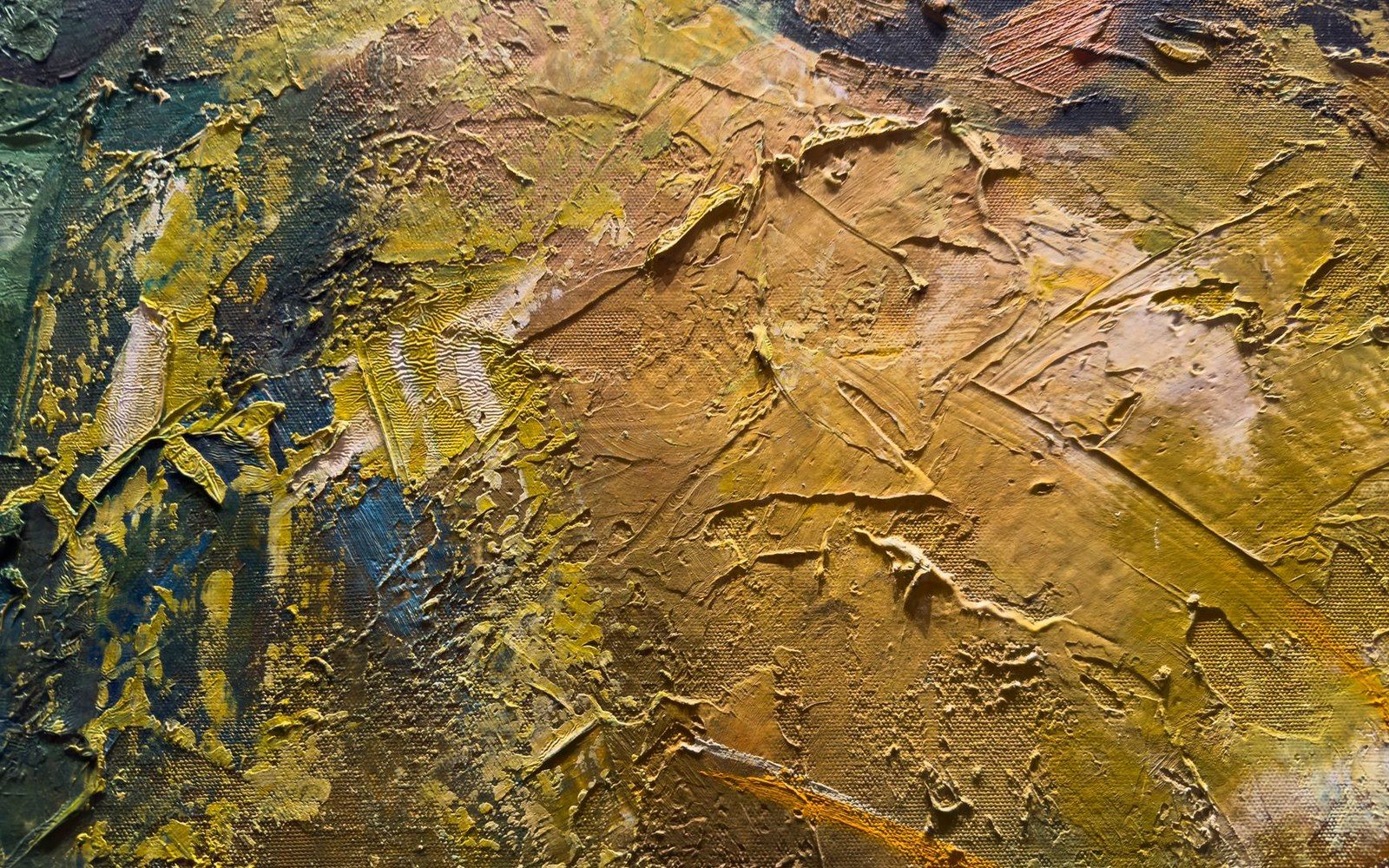
Impasto loaded heavily enough that gallery light, not tone, does the modelling.
Photo: Engin Akyurt / PexelsThe Making of the Canvas
By the mid-1990s Lucian Freud had settled into a working rhythm that most painters would find punishing. Each session ran to roughly four hours; each canvas required dozens of them. Benefits Supervisor Sleeping, completed in 1995, was built across approximately nine months of those sittings — the duration established not by romanticism but by the slow arithmetic of Freud's method, which piled observation on observation until the paint surface carried a density that could not be hurried into place.
The sitter was Sue Tilley, a benefits supervisor from south London who had modelled for Freud since the early 1990s. She is shown asleep — or performing sleep — on a worn sofa, her body filling the canvas with an authority that leaves no room for the surrounding space to function as anything but context. The composition is horizontal, the viewpoint slightly above, and the figure is pressed so close to the picture plane that there is almost nowhere for the eye to rest except on flesh. That compression is deliberate. Freud worked from a position very close to his subject, and the spatial logic of the finished painting records that proximity literally.
Paint as Accumulated Fact
The canvas Braque, Matisse and Derain saw in the studio in 1907, nine years before it was shown in public. — The Picture That Broke the Room It Was Shown In.
Photo: Les Demoiselles d'Avignon · Wikimedia CommonsThe surface of Benefits Supervisor Sleeping is impasto in the specific sense Freud preferred: not expressive brushwork deployed for texture's sake, but pigment dragged and reworked across a session and across many sessions, building a topography that corresponds to the painter's sustained looking rather than to any single decision. Freud used hog-hair brushes ↗ for most of his large-scale work by this period, and he mixed paint directly on the canvas rather than on a palette in the conventional sense, loading and adjusting colour as the sitting progressed. The result — visible in the folds of skin across the torso, the shadow pooling beneath the arm — is that the paint contains time as a physical property.
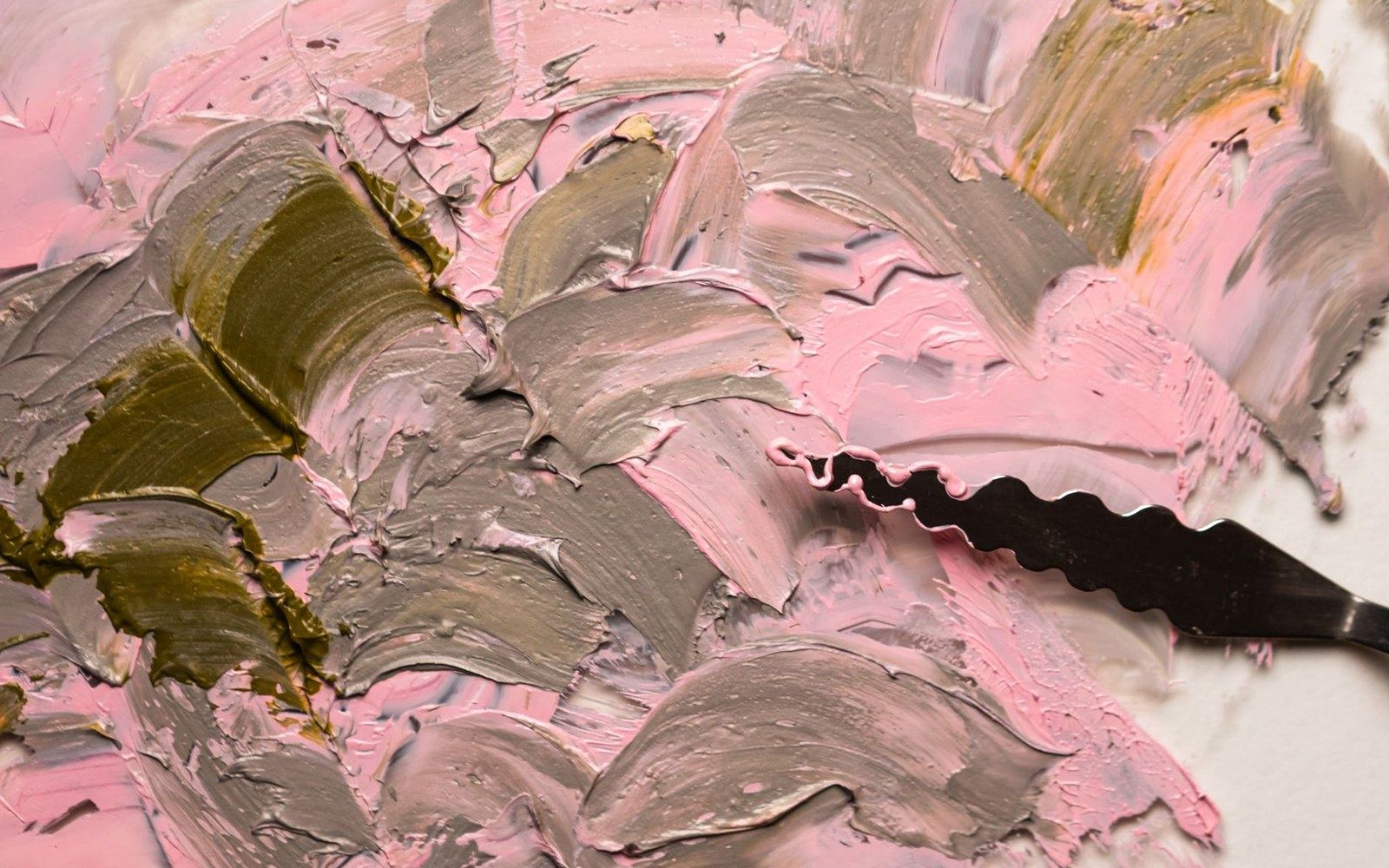
Close enough that the paint stops describing a person.
Photo: Polina ⠀ / PexelsThe Slade School of Fine Art had trained Freud briefly in the late 1940s, though his development owed more to sustained looking than to institutional method. By the 1990s his practice had diverged entirely from academic figure convention: no preparatory drawings transferred to canvas, no deliberate underpainting as a structural layer. He built the image directly and in sequence, which meant that early passages were sometimes repainted many times before a sitting's worth of observation settled into a form he would leave.
Olympia on the wall at the Musée d’Orsay, where the picture has hung since 1986.
Photo: Edouard Manet - Olympia - Google Art ProjectFXD · Wikimedia CommonsThe Late Practice in Context
What the auction result could not capture — and what the reproduction cannot quite deliver — is the scale.
Benefits Supervisor Sleeping belongs to a sequence of large horizontal and vertical figure paintings Freud made across the 1990s and into the 2000s — canvases in which scale and duration are themselves the argument. The sitter's weight and physical presence are rendered without editorialising: the paint does not flatter or condemn, it reports. This is what distinguishes Freud's late work from the various traditions of provocative figuration that ran alongside it: there is no irony in the surface, no quotation, no frame that tells the viewer how to feel. The canvas simply insists that this is what was there.
In May 2008 the painting was sold at Christie's New York for approximately $33.6 million ↗, a record for a living artist at auction at the time. That record has since been overtaken, but the figure anchored Freud's commercial standing in a way that affected how his late canvases circulated. The work remains in a private collection.
What the auction result could not capture — and what the reproduction cannot quite deliver — is the scale. The canvas measures approximately 151 by 219 centimetres. At that size, the sleeping figure is close to life-sized, and the accumulated paint surface reads differently than in any photograph: not as a representation of heaviness but as a heavy thing itself, built from months of four-hour mornings in a north London studio.